Edge And Gutters
Long runs dump heavy water at the eaves during storms. Gutters, straps, and outlets are rebuilt so they carry it without spilling onto dock aprons and trailers below.
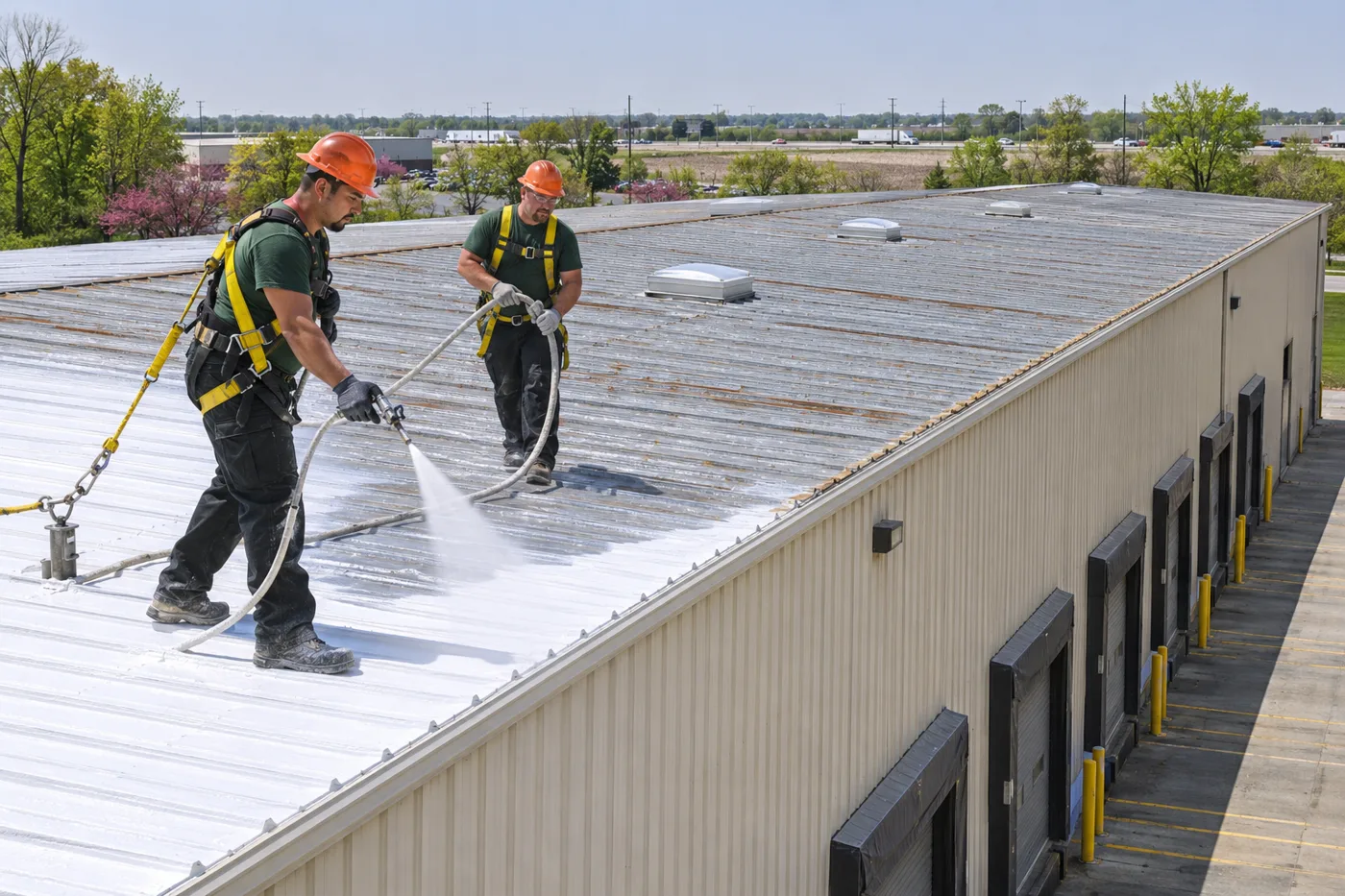
As a Whiteland metal roof coating contractor, we coat large distribution and industrial steel roofs, choosing silicone or acrylic section by section.
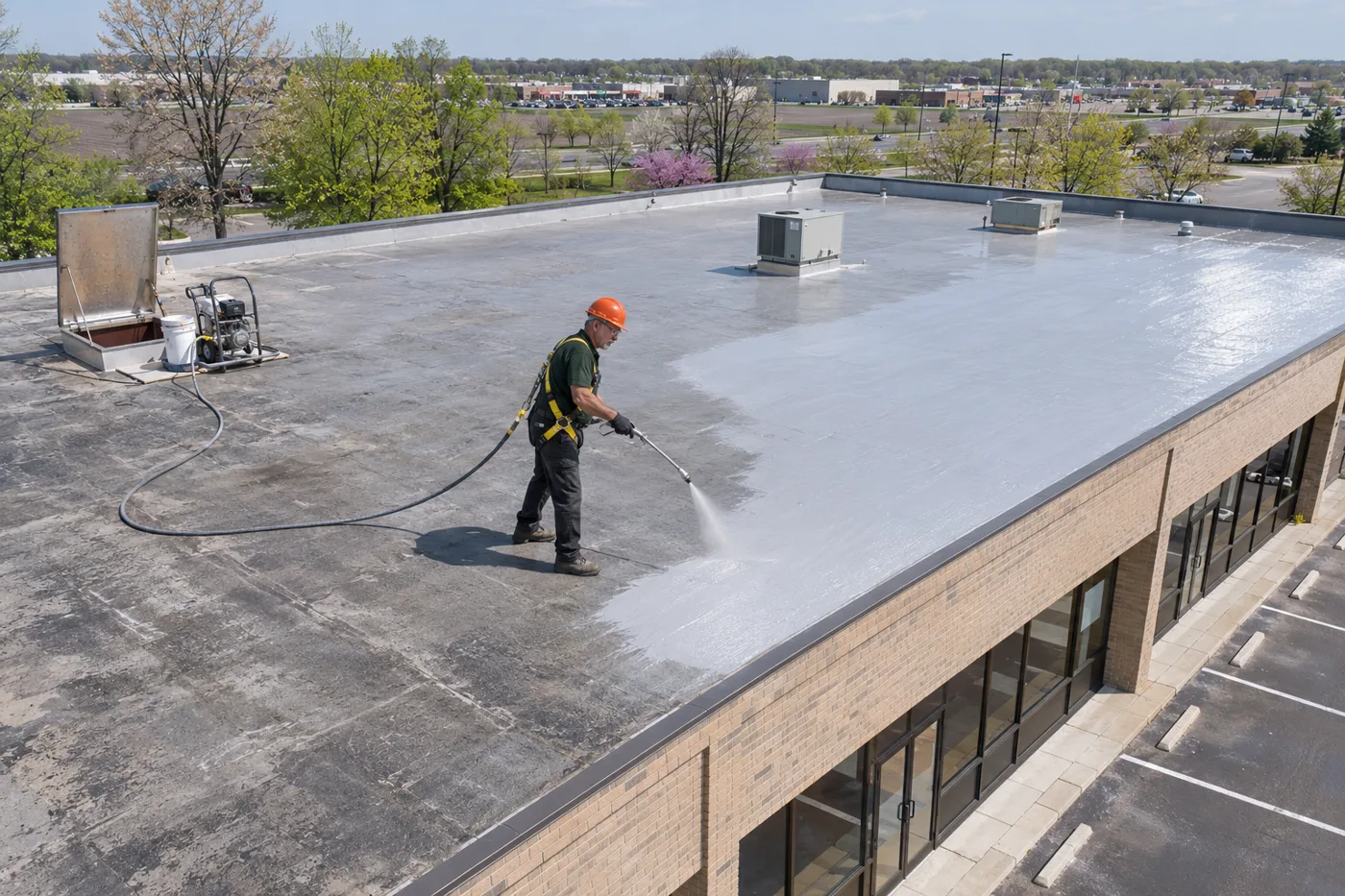
Whiteland metal roof coating work on distribution buildings means long panel runs. Thermal movement along those runs loosens screws and end laps more than on small roofs, and leaks often show up far from the opening.
We check every fastener line, reinforce end laps, and choose silicone where water lingers and acrylic where the roof drains fast, with the split drawn on the roof sketch.
Large Whiteland roofs get a five-zone walk focused on panel movement, drainage, and the distance water travels before it shows inside.
Long runs dump heavy water at the eaves during storms. Gutters, straps, and outlets are rebuilt so they carry it without spilling onto dock aprons and trailers below.
Thermal movement on long panels opens end laps first. Each one gets stitch screws, butyl tape, and fabric set into the first coat, starting with laps over stored goods.
Screws along long runs back out as panels move day to night. Rows are checked one at a time, and failed screws are upsized and capped with sealant.
Skylights and fans spread across big roofs. Each gets old sealant removed and one reinforced detail that the coating ties into on all sides.
Water lingering mid-roof gets silicone over primed steel, while fast-draining slopes get acrylic, and blocked outlets are cleared first.
On a big distribution roof, coating saves a tear-off over stock and docks.
Docks and truck courts stay open during the work, with lifts staged away from the busiest doors and gutter work done between loads.
Reinforced laps and capped screws handle the daily thermal movement of long panel runs through summer and winter.
Silicone goes where water sits, and acrylic where it drains, so each part of the roof gets a finish that suits it.
A reflective finish cools panels over racking and loading areas during summer afternoons, which helps staff working the docks.
Each system fits a part of Whiteland commercial roofs, and large buildings often use two of them on different sections.
Distribution roofs with long fastener lines, end laps, and skylight curbs to seal.
Mid-roof areas and settled bays where water lingers after rain.
Slopes on the same building that drain fast and suit a lower-cost finish.
Buildings that need insulation over the steel or better drainage on flat sections.
Office wings and guard buildings with asphalt shingle roofs.
Call and tell us where water shows inside and which dock or aisle sits under it. We will check the laps and screws upslope of that spot and price the fix.
Large roofs run through four stages, section by section.
We walk every run, test screws, check end laps, and note where water lingers so each section gets the right product. Interior stains are traced back along the ribs to the opening.
End laps get stitch screws and tape, loose screws are driven, upsized, and capped, and skylight curbs are rebuilt with one detail.
Panels are washed run by run, rust is primed, and fabric goes into laps and curbs before the first coat.
Silicone goes on lingering-water areas and acrylic on fast-draining slopes, at the planned thickness, with readings logged for each section.
Greenwood and these nearby towns are covered too, with the same roof walk and written scope.
Outside these towns? Call us or send us a message.
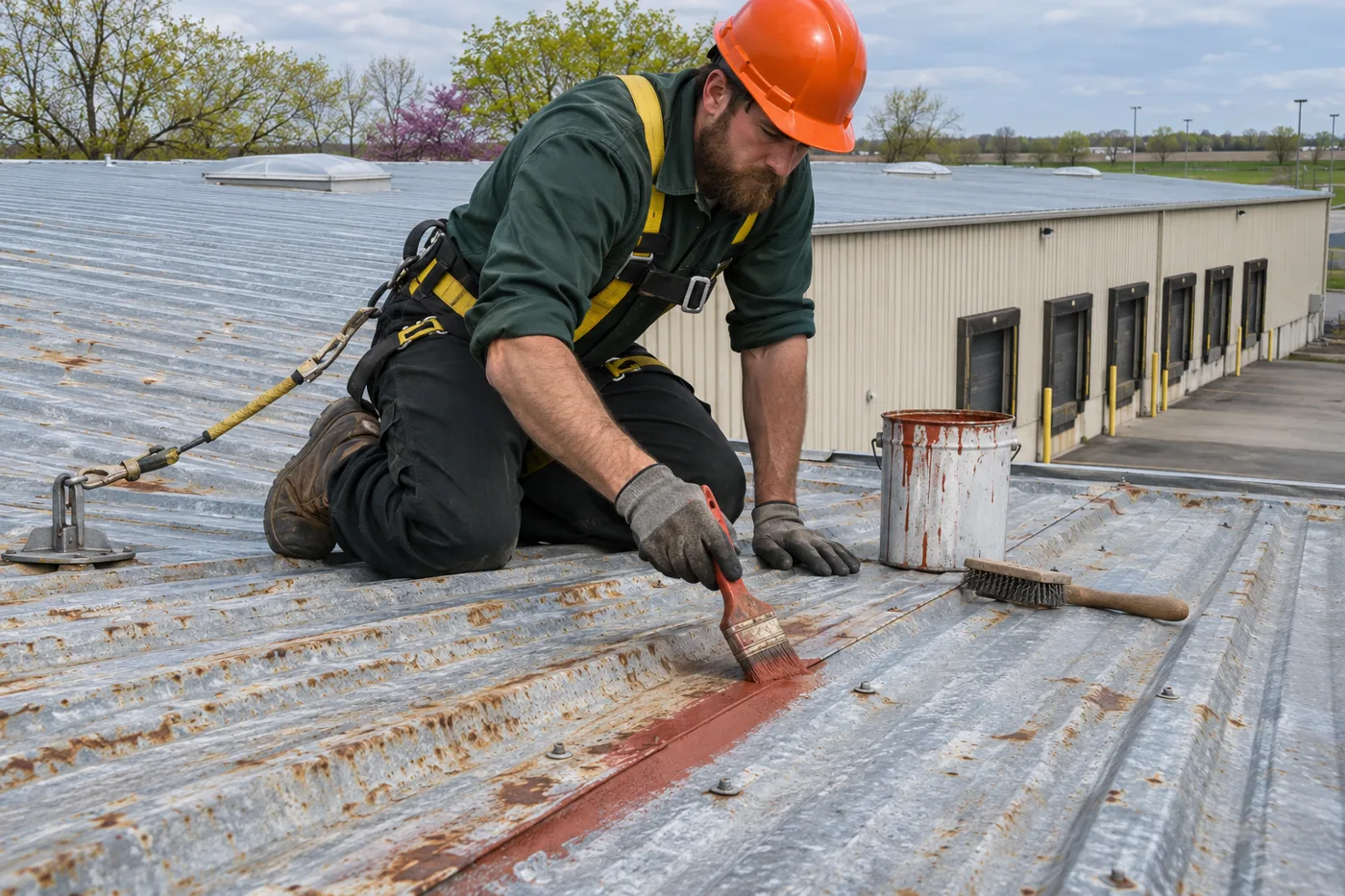
Plant and shop roofs coated in sections around shifts.
Warehouse roofs with long purlin lines of screws.
Farm-business buildings with rust at the eaves.
Flex building roofs shared by several tenants.
Jump to a question below.
Distribution and industrial buildings in Whiteland are in our area. Long, low-slope roofs get every fastener line checked and end laps reinforced, with silicone where water lingers and acrylic where it drains, all marked on one roof sketch.
Roof size, the number of runs and laps to repair, screws, curbs, skylights, and the mix of silicone and acrylic. Planning ranges are $2.50 to $4.00 per square foot for coating and $5 to $8 for replacement, firmed up after the roof walk.
Yes. Staging stays clear of docks and truck courts, and sections over the busiest doors are scheduled for quieter hours so trucks keep moving. Gutter repairs above dock doors are done between loads, and wash water is directed to drains away from the aprons.
Right here. Smaller commercial buildings around Whiteland get the same roof walk, repair list, and written scope as distribution centers, priced for the smaller roof. Offices, shops, and storage buildings all get their screws, laps, curbs, and gutters checked before a coating is chosen.
Call us or request an estimate online. We set a roof walk, mark repairs on a sketch, and send one written price. For large roofs, the scope also shows the planned section order and which docks each section sits above.
Steel grows and shrinks with temperature, and a long run moves more in total than a short one. That movement works screws and laps loose, especially near the ends of each run.
Both can. Water-holding sections get silicone and fast-draining slopes get acrylic, with the line between them drawn on the sketch so future recoats use the right product.
Curbs and racking feet get a reinforced detail and the coating ties into it. Where panels block access, we plan with the owner and the equipment contractor before starting.
Tell us the roof size, the number of docks, and how the building is used, and we will walk it and price the coating section by section.