Edge And Gutters
Eave trim and gutters catch the most water, so rust usually shows first along the bottom panel ends. We look for split gutter seams, loose hangers, and paint gone thin at the drip edge.
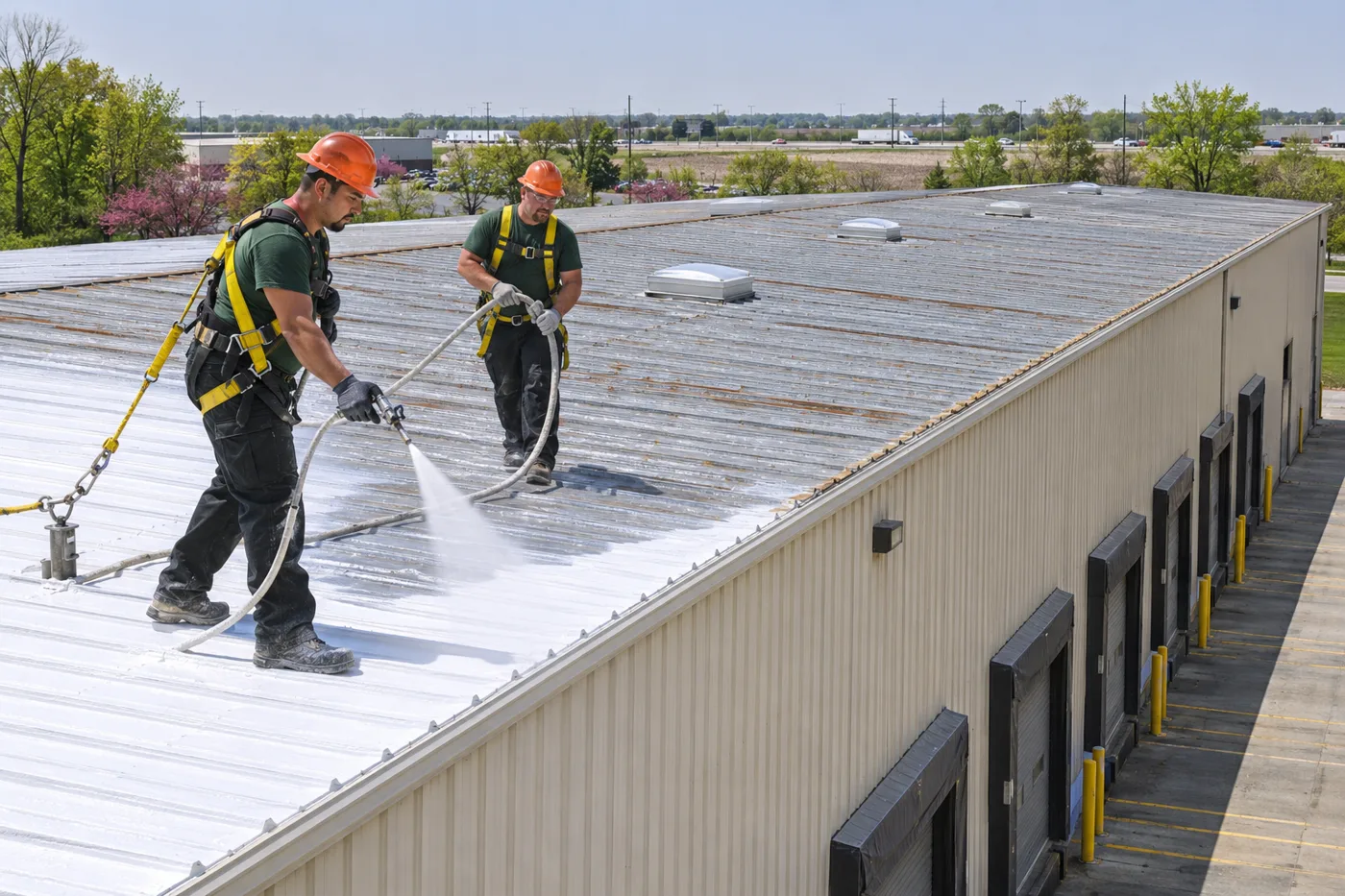
As a Greenwood metal roof coating contractor, we walk commercial steel roofs, fix screws, laps, and rust, then coat them for owners in Greenwood and five nearby towns.
Greenwood metal roof coating starts with five parts of the roof. We check each one before choosing a coating or writing a price.
Eave trim and gutters catch the most water, so rust usually shows first along the bottom panel ends. We look for split gutter seams, loose hangers, and paint gone thin at the drip edge.
Side laps and end laps open slowly as panels swell in July heat and shrink on January nights. Dark streaks below a lap and loose stitch screws tell us water is getting under the overlap.
Thousands of exposed screws hold a typical warehouse roof down, and each rubber washer hardens with age. We pull-test rows, count stripped holes, and note where screws have backed out.
Rooftop units, exhaust fans, and pipe boots collect layers of old caulk from different trades. Split sealant and rust at curb corners are common leak points on retail and plant roofs.
Flatter additions and sagging purlins hold rain long after a storm passes. Rings of dirt and rust on the panel flats show where water sits, and that changes which coating goes there.
Five coating services cover the steel, flat, foam, and shingle roofs found on Greenwood commercial buildings.
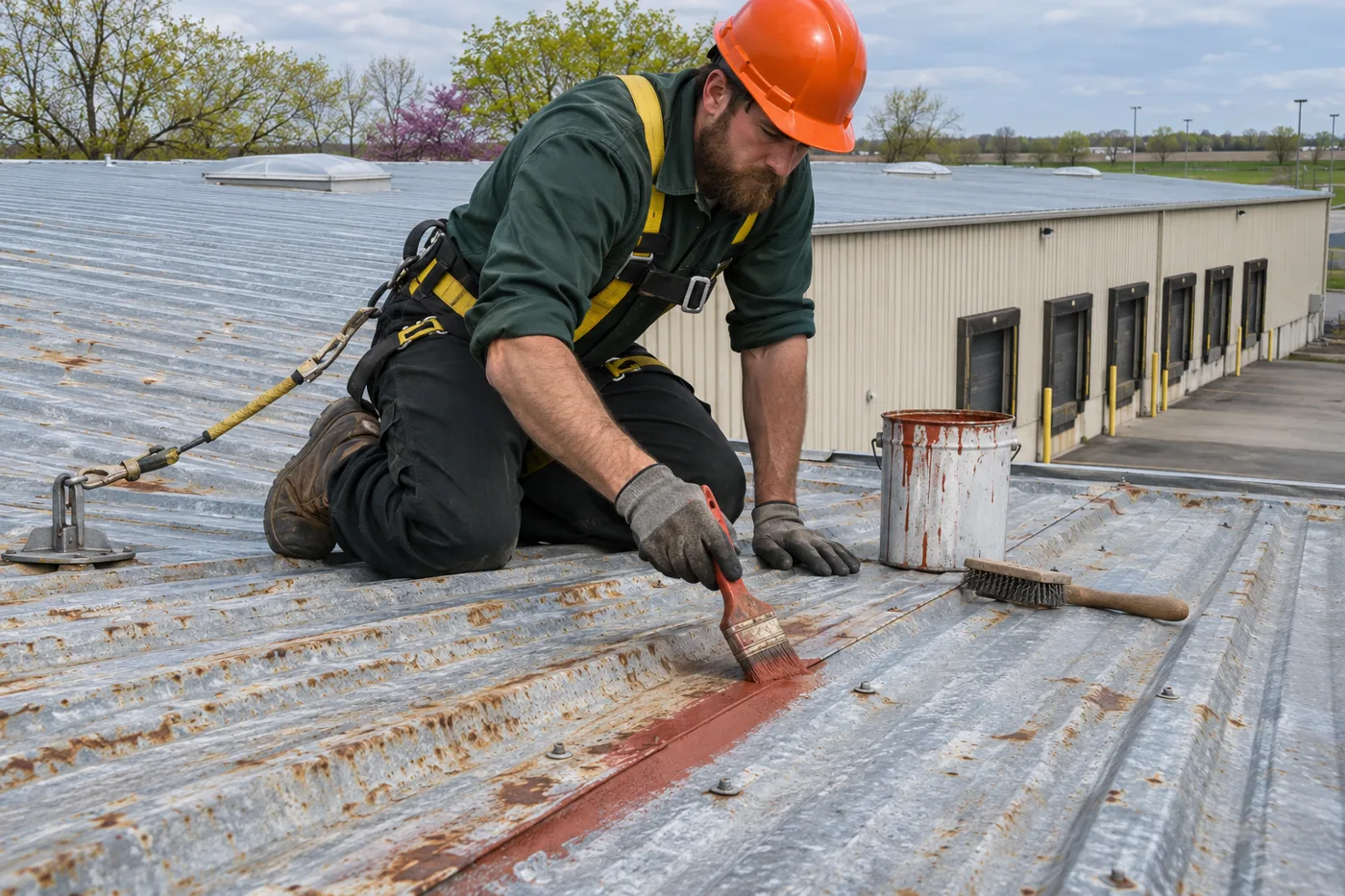
The full system for exposed-fastener and standing-seam steel: washing, rust primer, sealed screws and laps, then base and top coats over the whole field.
See Commercial Metal Roof Coating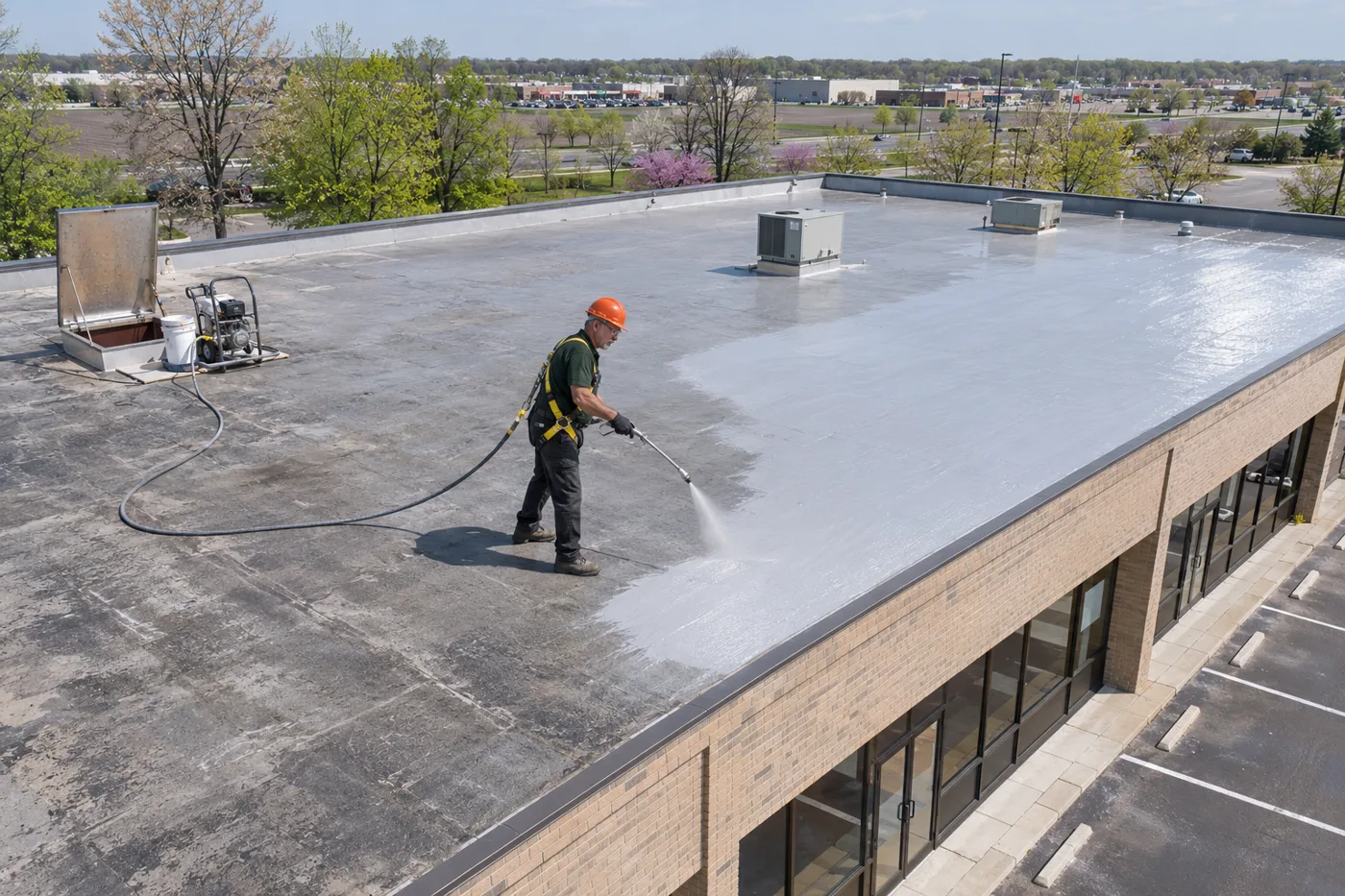
For low-slope steel and flat sections where rain sits after a storm, applied over primed panels and sealed seams.
See Silicone Roof Coating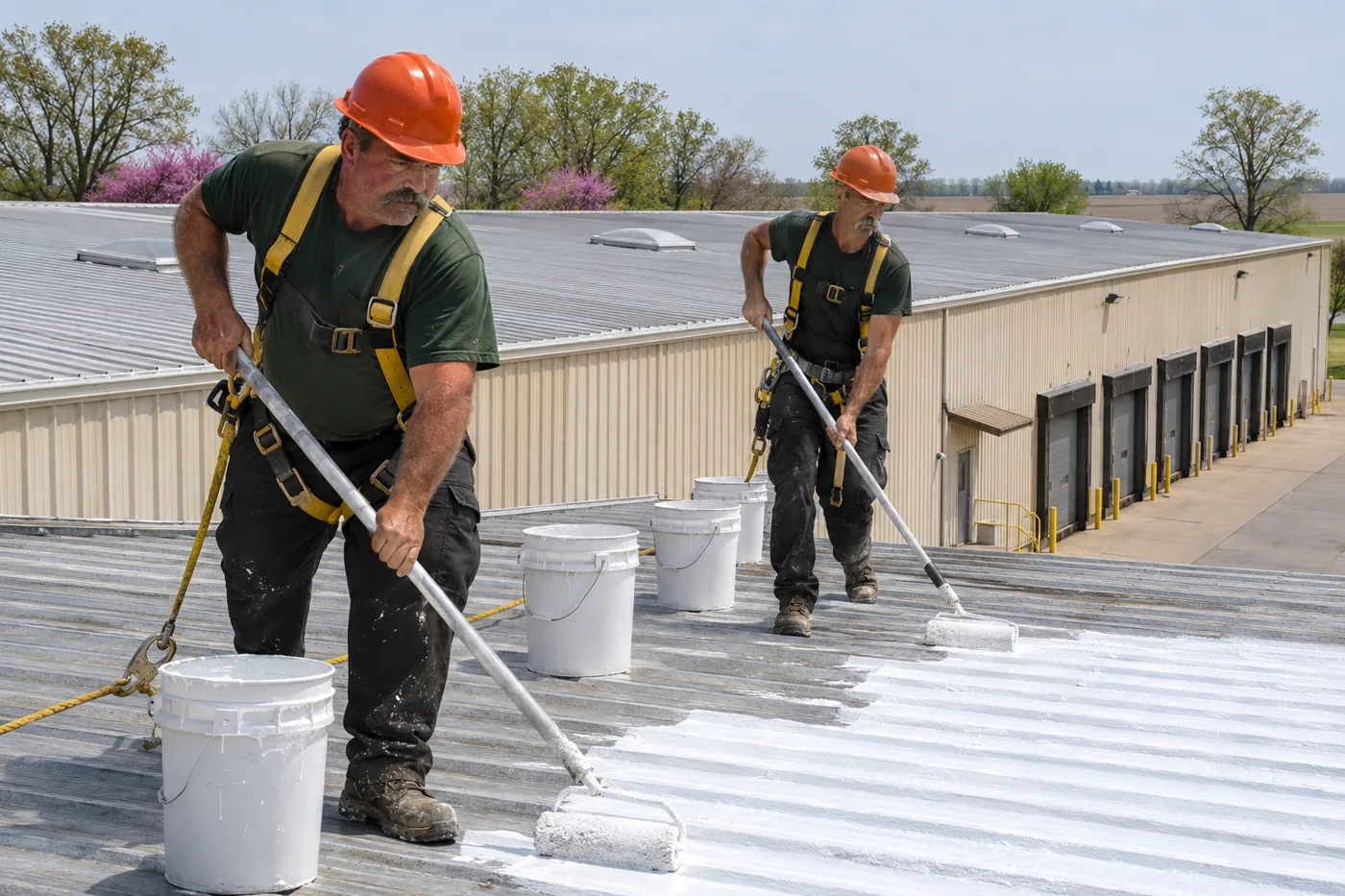
Water-based coats for pitched panels that drain fast, scheduled for dry, mild days so each coat sets.
See Acrylic Roof Coating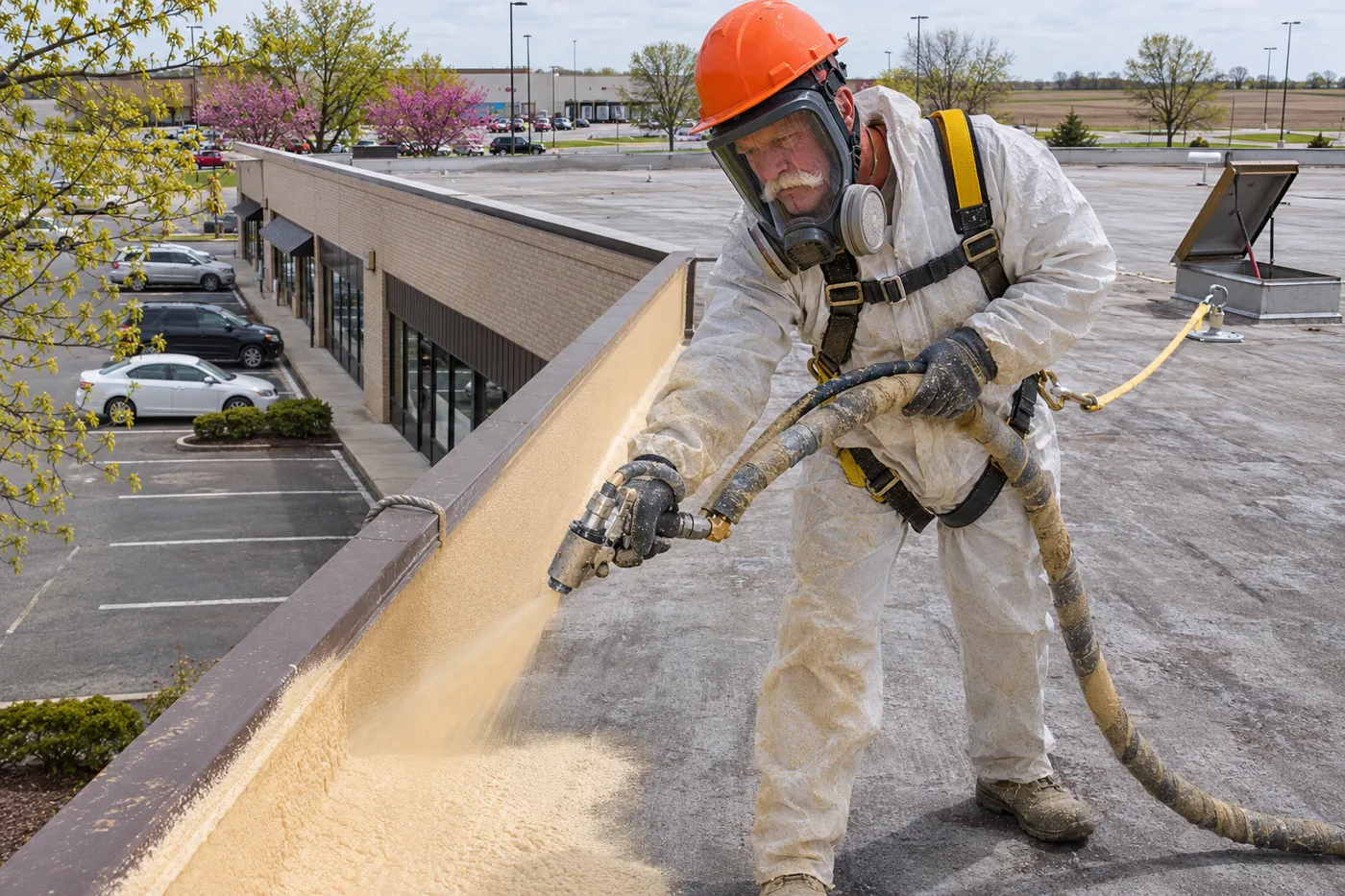
Closed-cell foam that fills the ribs, adds insulation, and stops lap leaks, finished with a protective topcoat.
See Spray Foam Roofing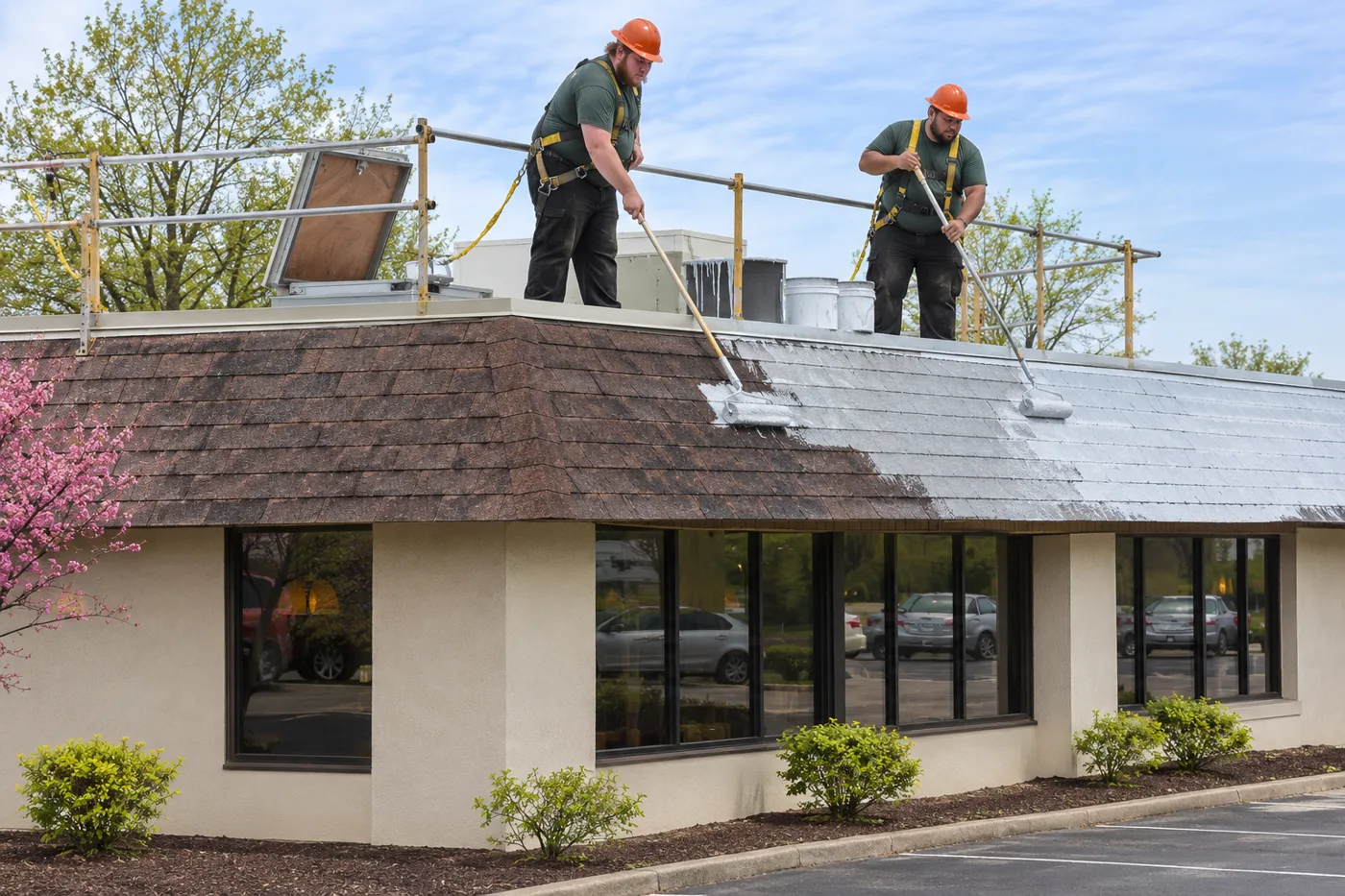
A breathable coating for asphalt shingle roofs on offices and churches, once tabs lie flat and the deck is firm.
See Shingle Roof CoatingMatch what you see on your roof to the closest row. The roof walk confirms which path fits.
| What You See | What It Usually Means | Where We Start |
|---|---|---|
| Chalky, faded paint over tight panels | The factory finish is worn but the steel and screws still hold | Wash, prime bare spots, and coat the whole roof |
| Drips lined up with screw rows | Washers have cracked or screws have backed out | Replace failed screws, cap every head, then coat |
| Water standing on a flatter addition | Low slope or sagging purlins hold rain for days | Clear drainage, then silicone on that section |
| Rust holes across many panels | Corrosion has gone through the steel in wide areas | New panels or a foam recover before any coating |
| Granules washing off shingles | Asphalt shingles are aging but still lie flat | Shingle coating after an adhesion test |
Call and tell us where water shows up inside. We will set a roof walk, find the opening, and price the repair before any coating.
Owners choose a coating when the steel is still solid and the leaks come from details that can be sealed.
Panels stay in place over shelving, production lines, and stores, so the building keeps working below the crew.
A white top coat reflects summer sun off the steel and cuts the heat that reaches the space under the roof.
Every fastener head and lap gets sealant before the coating, so the film bridges a closed joint.
Recoating later adds years to the same panels when the first system is kept clean and walked once a year.
Four stages take a roof from the first walk to the last coat. Pick a stage to see what happens.
We walk each section, probe rust at eaves and laps, pull-test screws, and photograph curbs. You get a marked roof sketch and a written scope with one price.
Failed screws come out and oversized ones go in. Open laps get stitched and taped, and any panel with rust holes is replaced before prep starts.
Pressure washing strips chalk, dirt, and loose paint. Bare rust gets a rust-inhibiting primer, and seams, curbs, and screw heads get mastic and fabric.
Coats go on during dry weather inside the product limits. We measure wet mils as we spray and walk the finished roof with you at the end.
We coat commercial metal roofs in Greenwood and in Franklin, Shelbyville, Bargersville, New Whiteland, and Whiteland.
Outside these towns? Call us or send us a message.
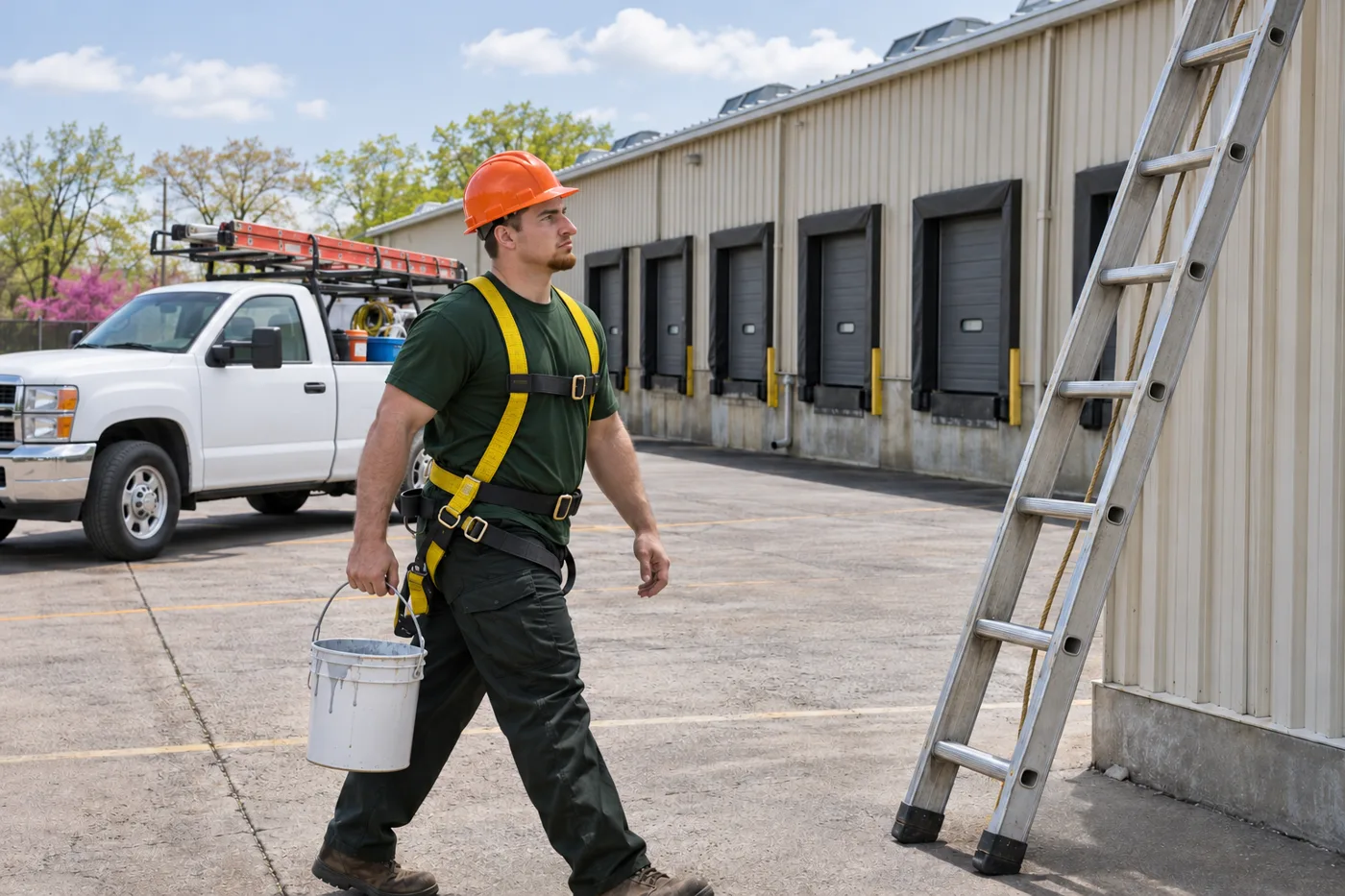
Plant and shop roofs coated in sections around shifts.
Warehouse roofs with long purlin lines of screws.
Farm-business buildings with rust at the eaves.
Flex building roofs shared by several tenants.
Distribution roofs with long panel runs.
Tap a question to jump to its answer.
Plan on 10 to 20 years from most systems here. Film thickness, the prep under it, and yearly cleaning decide where a roof lands. Rust left untreated and screws left unsealed cut that life short, which is why both are handled first.
Coating fits when panels and purlins are firm and the trouble is surface rust, laps, and screws. Replacement fits when panels are rusted through or bent. On a busy warehouse, coating also keeps trucks moving because nothing comes off the roof.
On firm panels it often is, because one continuous film seals laps, screws, and rust spots while production keeps running under the roof. Over panels with holes rusted through, those areas are repaired or replaced first, and the scope lists them.
Yes. Pole barns and farm shops coat the same way as other steel buildings. They often have more exposed screws and open eaves, so lower panels and end laps get extra attention, and stored equipment is covered before washing starts.
Expect about $2.50 to $4.00 per square foot for coating and about $5 to $8 for full replacement. Roof size, rust, screw count, penetrations, the coating chosen, film thickness, and lift access move the number. A roof walk sets the final price.
Usually not, as long as the dents did not crack panels or split seams. We check dents, screw heads, and laps for fractures and repair them first. File any insurance claim before work starts so the damage is on record.
The City of Greenwood Community Development Services takes building permit applications in the city. Commercial work in Indiana follows the Indiana Building Code, 675 IAC 13. A coating with no structural change can be handled differently than a reroof, so we confirm with the city first.
Send the roof size and what you see inside, and we will set a roof walk and a written price.