Edge And Gutters
Bottom panel ends sit in gutter water and rust from the cut edge back. We grind those ends, prime them, and reset loose gutter straps so water leaves the roof.
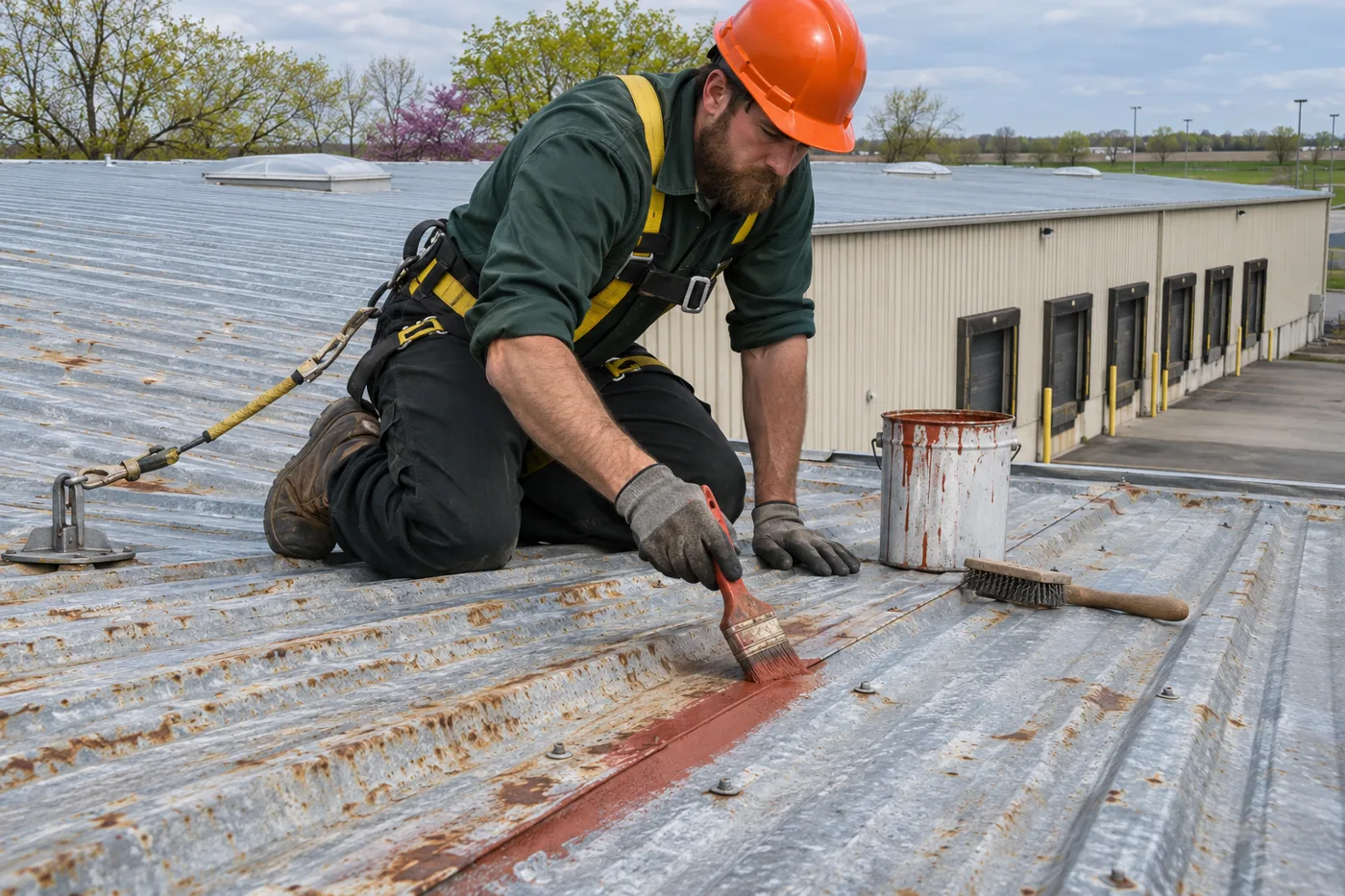
As a Greenwood commercial metal roof coating contractor, we restore exposed-fastener and standing-seam steel roofs on plants, warehouses, and retail centers without tearing them off.
Greenwood commercial metal roof coating works on steel that still holds its shape. Check your roof against each row.
| Roof Detail | Ready To Coat | Fix First |
|---|---|---|
| Panels | Firm underfoot, surface rust only | Rust holes or bent ribs get new panels |
| Screws | Snug heads with intact washers | Backed-out or stripped screws get upsized |
| Laps | Tight overlaps with light staining | Gapped laps get stitch screws and tape |
| Insulation | Dry under the panels | Wet batts get cut out and replaced |
| Curbs | One sealant layer in fair shape | Stacked old caulk gets cut back |
| Gutters | Seams tight and straps holding | Split seams and loose straps get reset |
A plant or warehouse roof gets the same five-zone walk before anything is sprayed.
Bottom panel ends sit in gutter water and rust from the cut edge back. We grind those ends, prime them, and reset loose gutter straps so water leaves the roof.
Side laps on long runs creep open with every hot afternoon. Stitch screws every foot or so pull them tight, and butyl tape covers the joint before fabric goes in.
Washers crack and screws work loose along each purlin line. Loose ones get driven down, stripped holes get a larger screw, and every head is capped with sealant.
Exhaust fans over production lines leave residue that keeps coatings from bonding. Curbs are degreased, old caulk is cut away, and a fabric detail wraps each corner.
Lower roof sections next to taller bays catch extra runoff. Rust rings mark where water sits, and those areas get silicone instead of acrylic.
Each system has a place on Greenwood commercial roofs. Here is where each one fits.
The base system for steel roofs with rust, worn paint, and leaking screws, applied across the whole field.
Low-slope steel and flat sections where puddles stay a day or more after rain.
Sloped panels that shed water fast, where a lower material cost matters.
Roofs that need insulation added and leak at many laps at once.
Shingle sections on offices or additions next to a steel building.
Coating a steel roof does four practical things for the building below it.
Screw heads, laps, and curb corners sit under one continuous film after they are sealed, so wind-driven rain has no open joint to find.
Primer and coating keep water and air off bare steel at the laps and eaves, the two places corrosion spreads fastest on older panels.
A white finish bounces July sun off panels that would otherwise bake, which helps warehouses and plant floors under uninsulated steel.
Nothing comes off the roof, so lines, racks, and stores below keep running while the crew works section by section overhead.
Call and describe where the drips land. We will trace them to the screw rows above and price the repair.
The same four stages run on every steel roof, in this order.
We walk the panels, probe rust at eaves and laps, and pull-test screw rows on each section. A core at any soft spot tells us if the insulation is wet.
Fastener sealing before coating is the step that decides how long the roof lasts. Loose screws are driven, stripped ones upsized, and each head capped.
Pressure washing removes chalk and grime from the panels. Rust is brushed to firm steel and primed, and laps get tape and fabric.
Base coat goes over the sealed details first, then the field, then the top coat at the planned thickness. A gauge checks each pass.
Some roofs need a second system on part of the building.
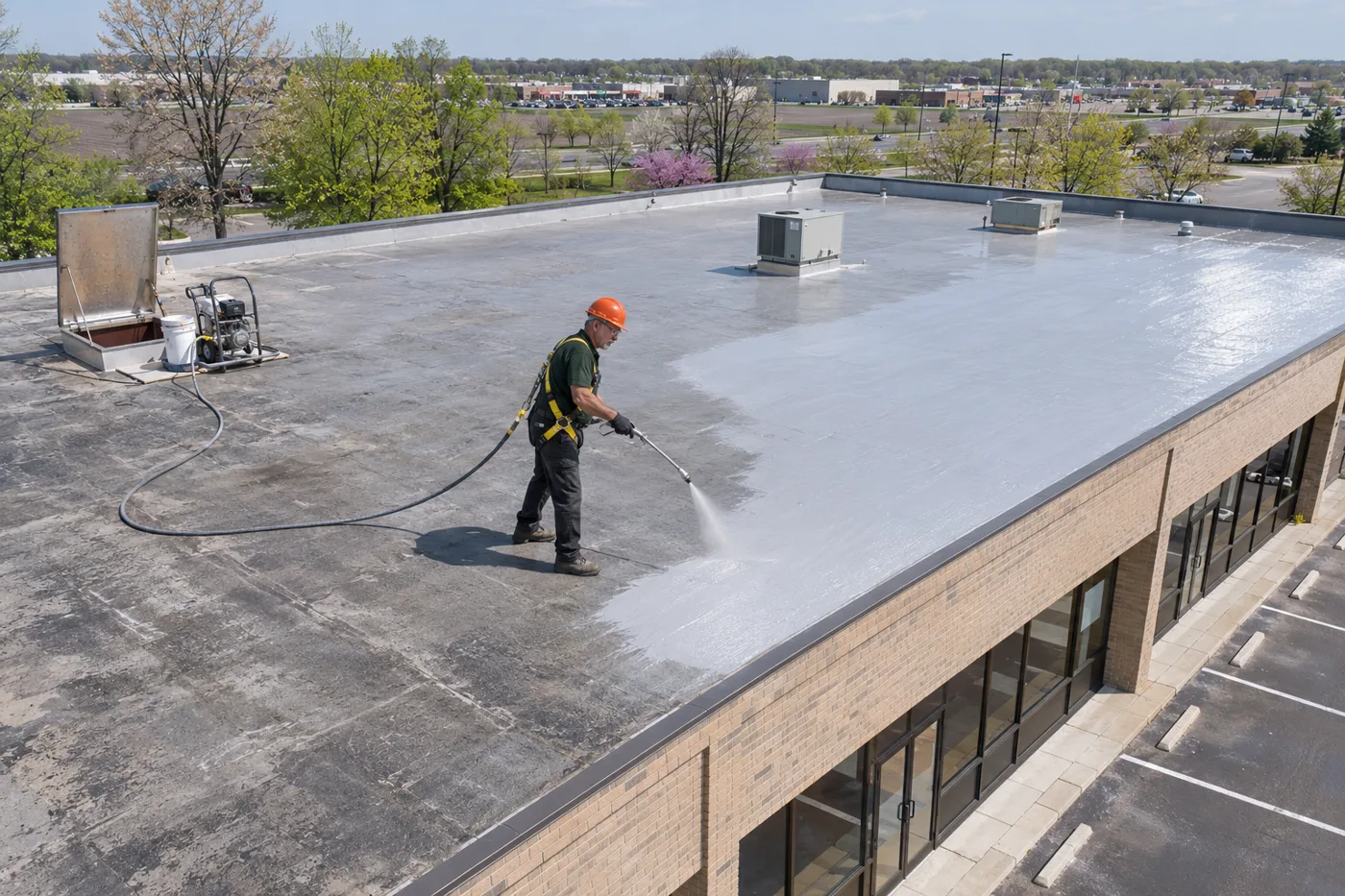
Flat additions and loading-dock roofs where water stays after storms get silicone.
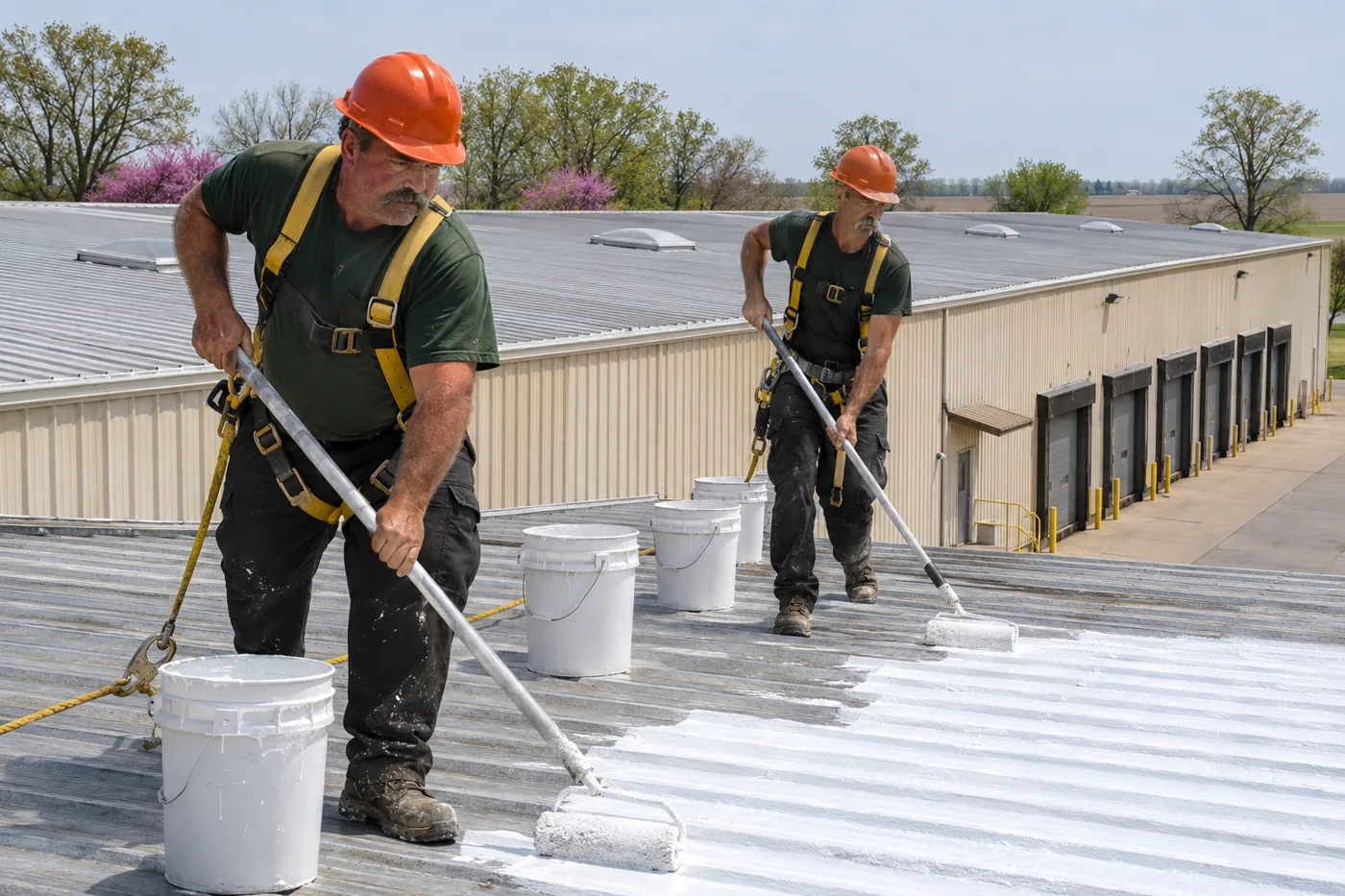
Pitched steel sections that drain well take acrylic as a lighter-cost finish.
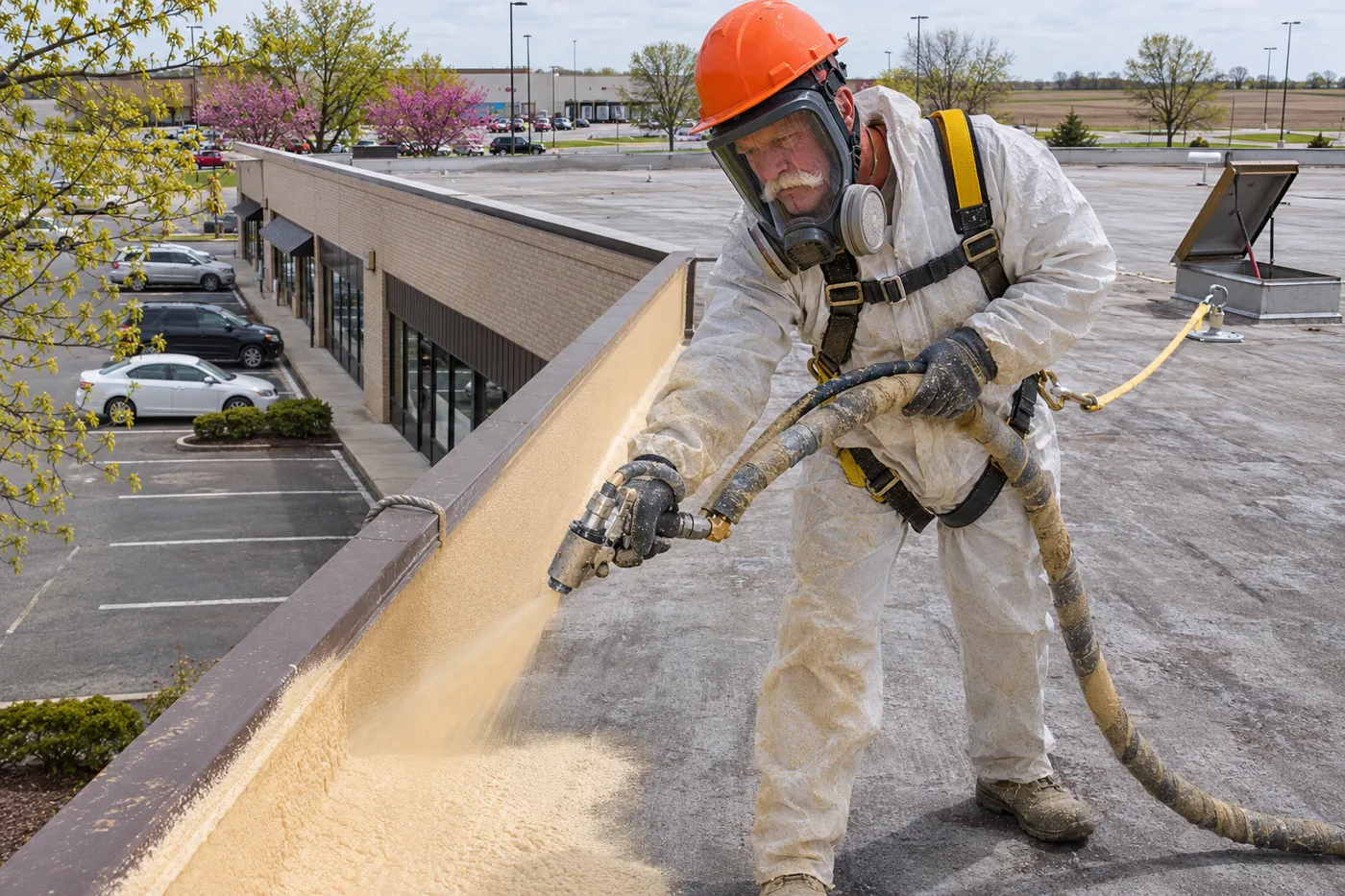
Buildings that run hot or cold can add insulation with foam over the steel.
Jump to a question below.
It returns an aging steel roof to a watertight state while the stores stay open. Panels are washed, rust is treated, stripped screws are replaced, seams and curbs get reinforced mastic, and primer and the finish coat go on last.
Slope, drainage, and rust decide it. Silicone handles standing water and sun well on low-slope steel. Acrylic suits pitched roofs that drain fast and costs less per gallon. Rusty panels need a rust-inhibiting primer under either product.
High-solids silicone sprayed at a thick dry film is often the longest-lived choice on low-slope steel because sunlight and puddles do little to it. Thickness matters more than brand, so we read wet mils on every pass.
Most steel roofs leak at the screws first. Temperature swings back screws out and wear out the washers, so each loose screw is driven or replaced and capped before the coating bridges over it.
Indiana winters cross the freezing mark again and again, and panels move each time. Meltwater that refreezes in a lap pushes it wider. A coating that stretches with the steel, laid over sealed laps and screws, holds up to that movement.
Both coat well. Standing-seam roofs leak less at fasteners and more at seam ends, clips, and penetrations, so prep there focuses on end laps, curb flashing, and any seams that have lifted. Exposed-fastener roofs need every screw checked.
Units stay in place in most cases. We cut out old caulk around each curb, wrap the curb with fabric and mastic, and coat up the sides, so the detail ties into the roof system around it.
Once a year and after any hail storm. A walk catches a cut from foot traffic, a clogged gutter, or a worn spot near a fan before water gets under the film, and small touch-ups keep the coating in good shape.
Tell us the roof area and the building use, and we will walk it and price the full coating system.