Edge And Gutters
Granules collect in gutters as shingles age. A heavy layer there tells us how much wear the surface has seen, and the drip edge gets checked for rot behind it.
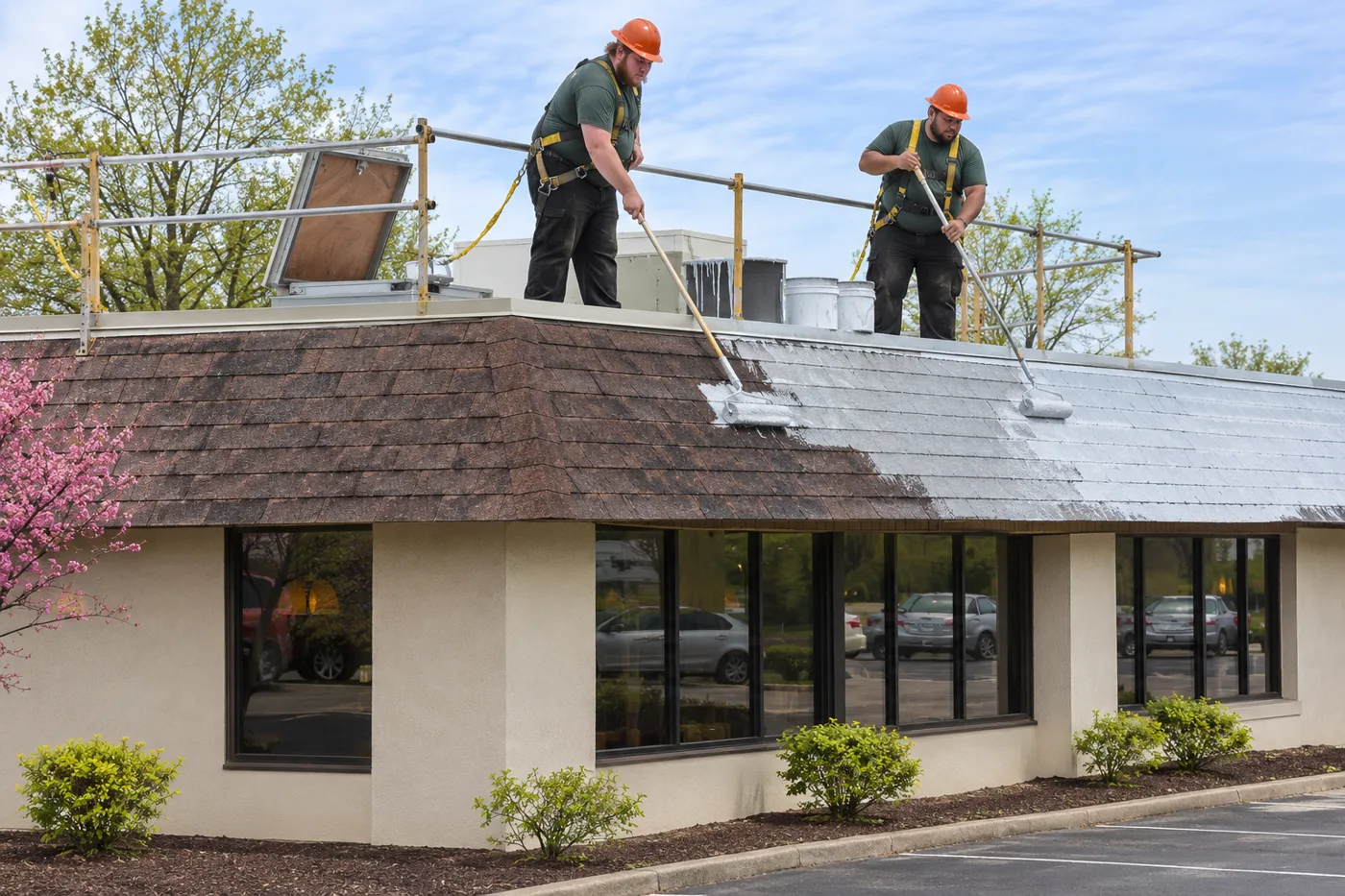
As a Greenwood shingle roof coating contractor, we coat asphalt shingle roofs on offices, churches, and small retail buildings when the shingles lie flat and the deck is firm.
Greenwood shingle roof coating is a narrow fit. Most roofs pass or fail on these five rows.
| Roof Detail | Ready To Coat | Reshingle Instead |
|---|---|---|
| Shingle shape | Flat with tabs sealed down | Curled, cupped, or lifted tabs |
| Granules | Some loss but mat still covered | Bare mat showing across slopes |
| Deck | Firm under every step | Soft or sagging spots |
| Ventilation | Attic vents open and working | Trapped heat and moisture |
| Leaks | At boots or flashing only | Spread across the field |
| Shingle layers | One layer on a firm deck | Two or more worn layers point to tear-off |
A shingle roof gets a different five-zone walk than steel, because the shingles themselves decide whether coating makes sense at all.
Granules collect in gutters as shingles age. A heavy layer there tells us how much wear the surface has seen, and the drip edge gets checked for rot behind it.
Tabs need to lie flat and stay sealed. Curling or blistering across slopes points to reshingling, while light granule loss on flat tabs is a good candidate for coating.
Popped nails lift tabs and open small holes. They get reset and sealed before any coating goes on, along with exposed nail heads at ridge caps.
Cracked pipe boots and loose step flashing cause most shingle leaks. Those are replaced first so the coating covers solid details around every pipe and wall.
Blocked attic vents trap heat and moisture under the shingles. We check airflow from the soffits to the ridge, since a breathable coating still needs a ventilated roof.
Shingle coating is one of five systems we apply around Greenwood. Here is how each fits.
The steel coating system for the warehouse, shop, or storage building behind the office.
Flat roof sections where rain sits, often over a rear addition or covered entry.
Pitched steel that drains fast and needs a lower-cost reflective finish.
Steel or flat roofs where insulation is part of the plan and drainage needs help.
Asphalt shingles on offices, churches, and small retail buildings that still lie flat and stay sealed.
On the right shingle roof, a coating buys time before a full reroof.
The coating holds loose granules in place and slows further wear.
Hairline cracks in aging shingles get sealed under one film.
A lighter finish on the shingles cuts heat gain into offices and fellowship halls.
Nothing comes off the roof or gets hauled away, so the building stays open during the work.
Call and tell us about the roof. We will check whether the shingles can be coated or need replacing.
Shingle coating has a strict first stage. If the roof passes, the other three follow.
Our walk checks every slope for curling, bare mat, and soft decking, then tests adhesion on a small patch and looks at attic ventilation.
Cracked pipe boots, loose flashing, and missing shingles are fixed. Popped nails are reset and sealed so the surface is flat.
A low-pressure wash removes dirt and moss without stripping granules. Valleys and flashing get reinforcing fabric.
A breathable coating made for asphalt shingles goes on at the specified rate, slope by slope, and we walk the finished roof with you.
Offices with shingle roofs often sit beside other roof types on the same property.
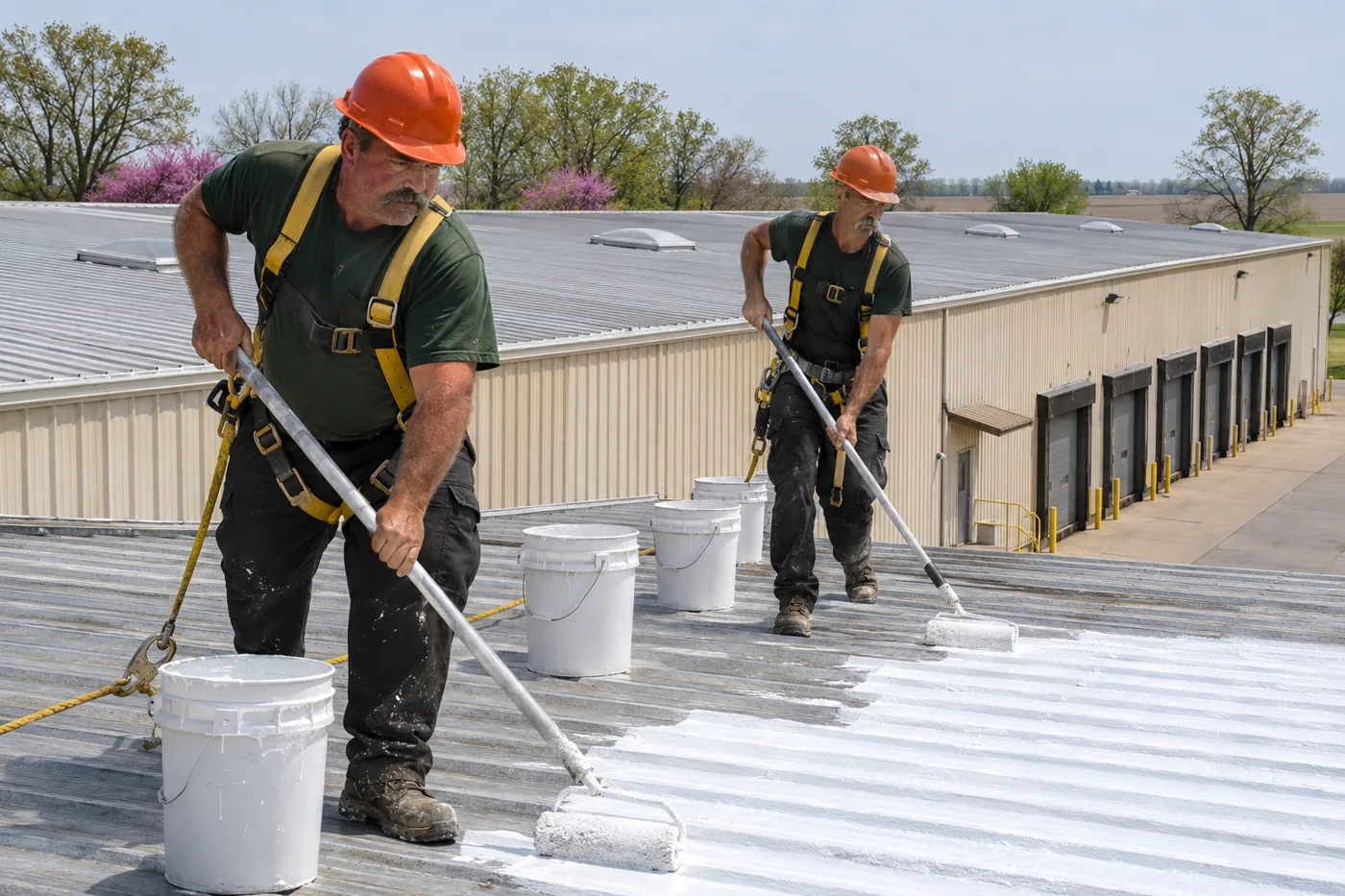
Pitched steel shops and storage buildings on the same lot take acrylic.
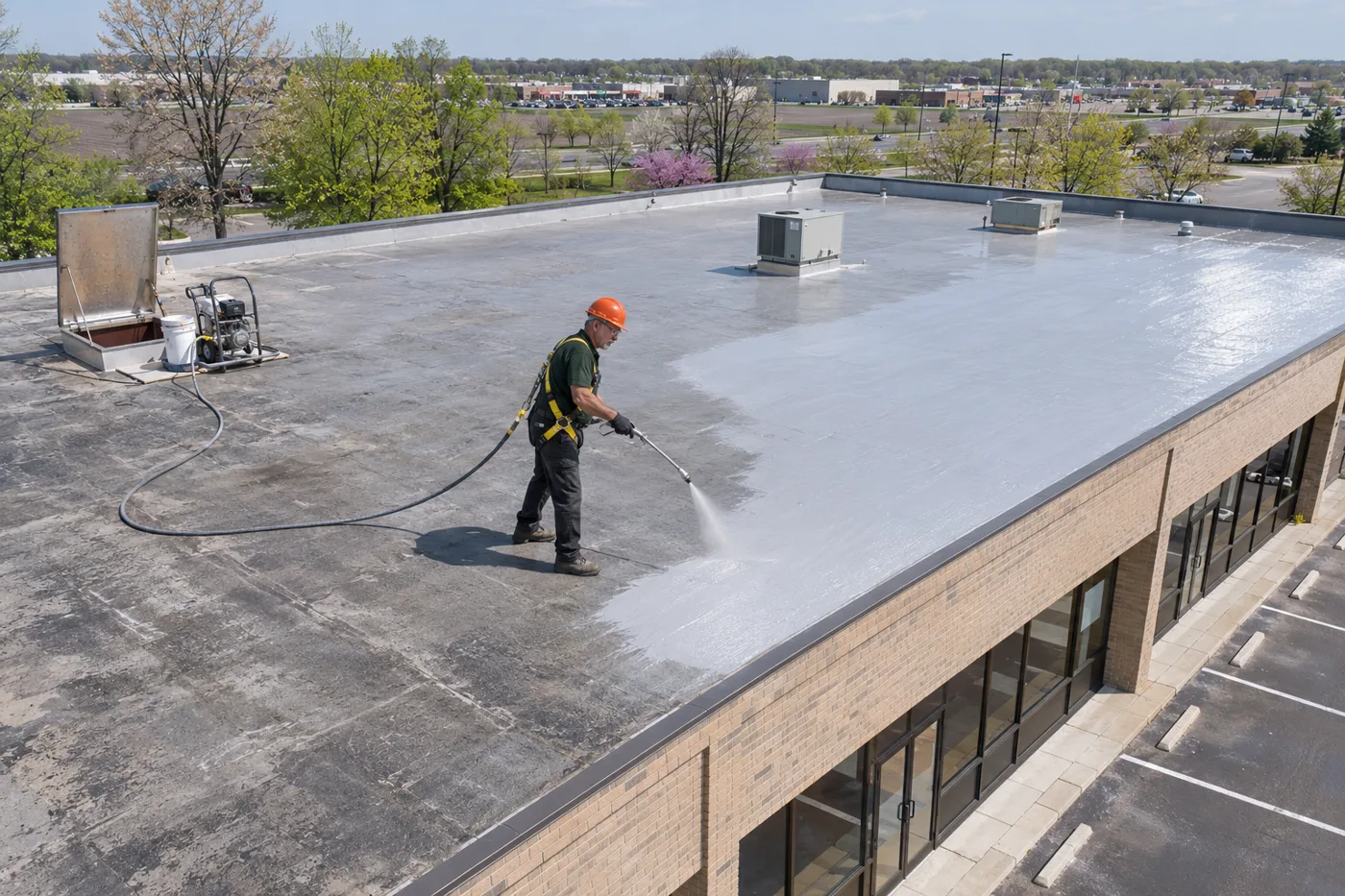
A flat rear addition where rain sits after storms gets silicone.
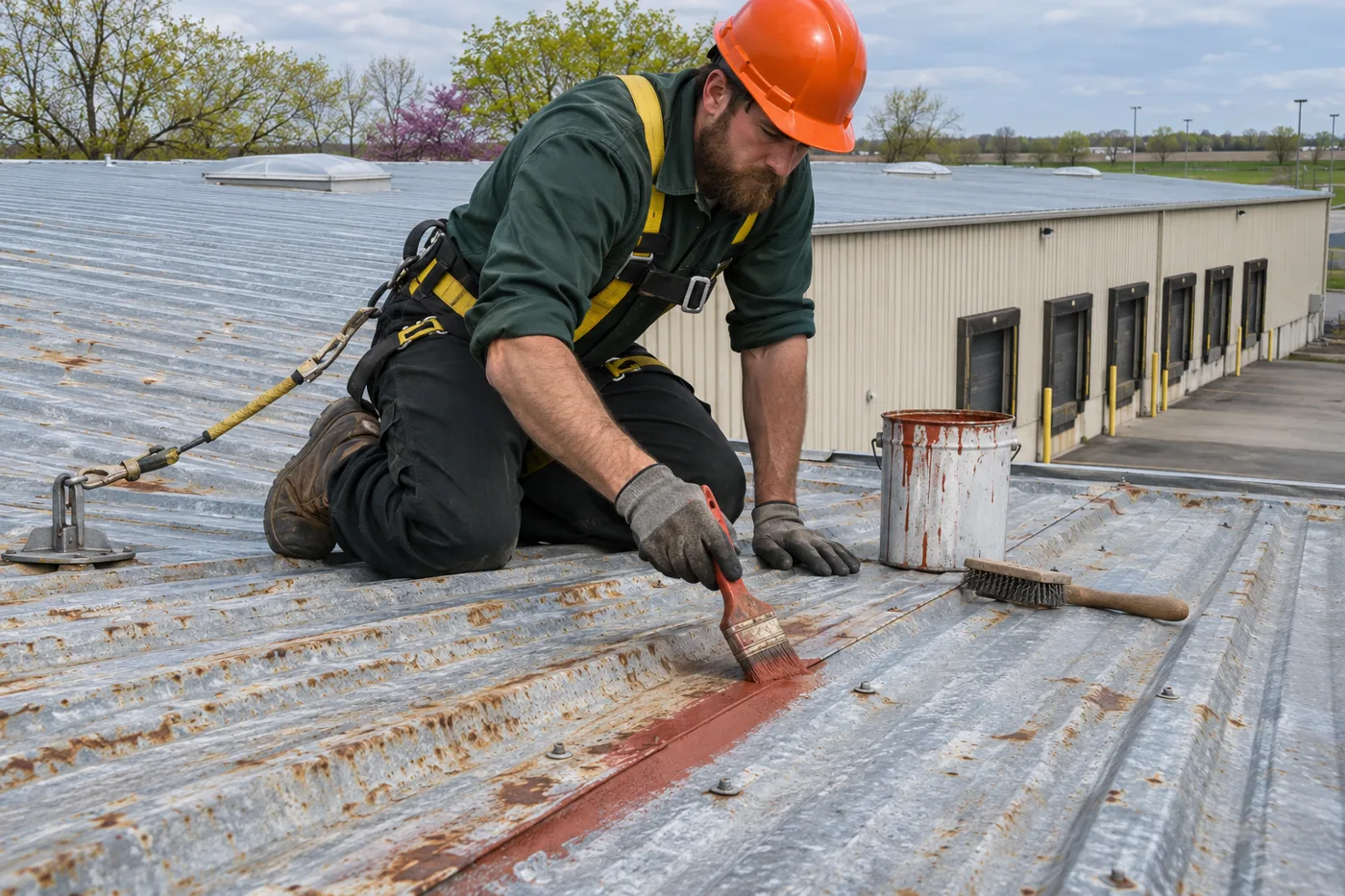
The main steel building needs full rust and screw work under its coating.
Jump to a question below.
It is common on offices, churches, and small retail buildings with asphalt shingle roofs. A coating seals aging shingles that still lie flat and stay attached. Missing shingles, soft decking, and curled tabs get repaired first.
Coating usually costs less because nothing is torn off or hauled away. Our planning range is about $2.50 to $4.00 per square foot for coating and $5 to $8 for replacement. Reshingling makes more sense when shingles are failing across the roof, and we tell owners plainly when that is the case.
Use a product made for asphalt shingles, usually a breathable acrylic or silicone that grips granules without trapping moisture. Steel roof products are a poor swap. We test adhesion, confirm the shingles lie flat, and check ventilation first.
When shingles lie flat, the deck is firm, and granule loss is moderate, it works well. It slows wear and reseals the surface. Curling, blistering, or a wet deck rule it out, and we say so plainly.
Yes. Heat and moisture still need to leave the attic, so blocked vents are opened before coating. A breathable coating over a poorly vented attic wears faster, and trapped moisture can soften the deck. We check soffit and ridge vents on the roof walk and add the fixes to the scope.
A coating slows wear rather than resetting the clock. On flat, firm shingles, a coating can stretch the time before a reroof by several years, and a recoat later can add more if the deck stays dry.
Services and office hours continue, since coating happens on the roof with no tear-off. We plan work around events and keep entrances clear of equipment.
Coatings for shingles come in white and a few darker shades. White reflects the most heat; a darker shade can suit a building where the look of the roof from the street matters.
Tell us about the shingle roof, the building, and any leaks inside, and we will walk it and tell you plainly whether coating fits.