Edge And Gutters
Fast-draining roofs dump a lot of water at the eaves. Gutter seams, straps, and the drip edge are fixed so runoff leaves the panels before it can sit.
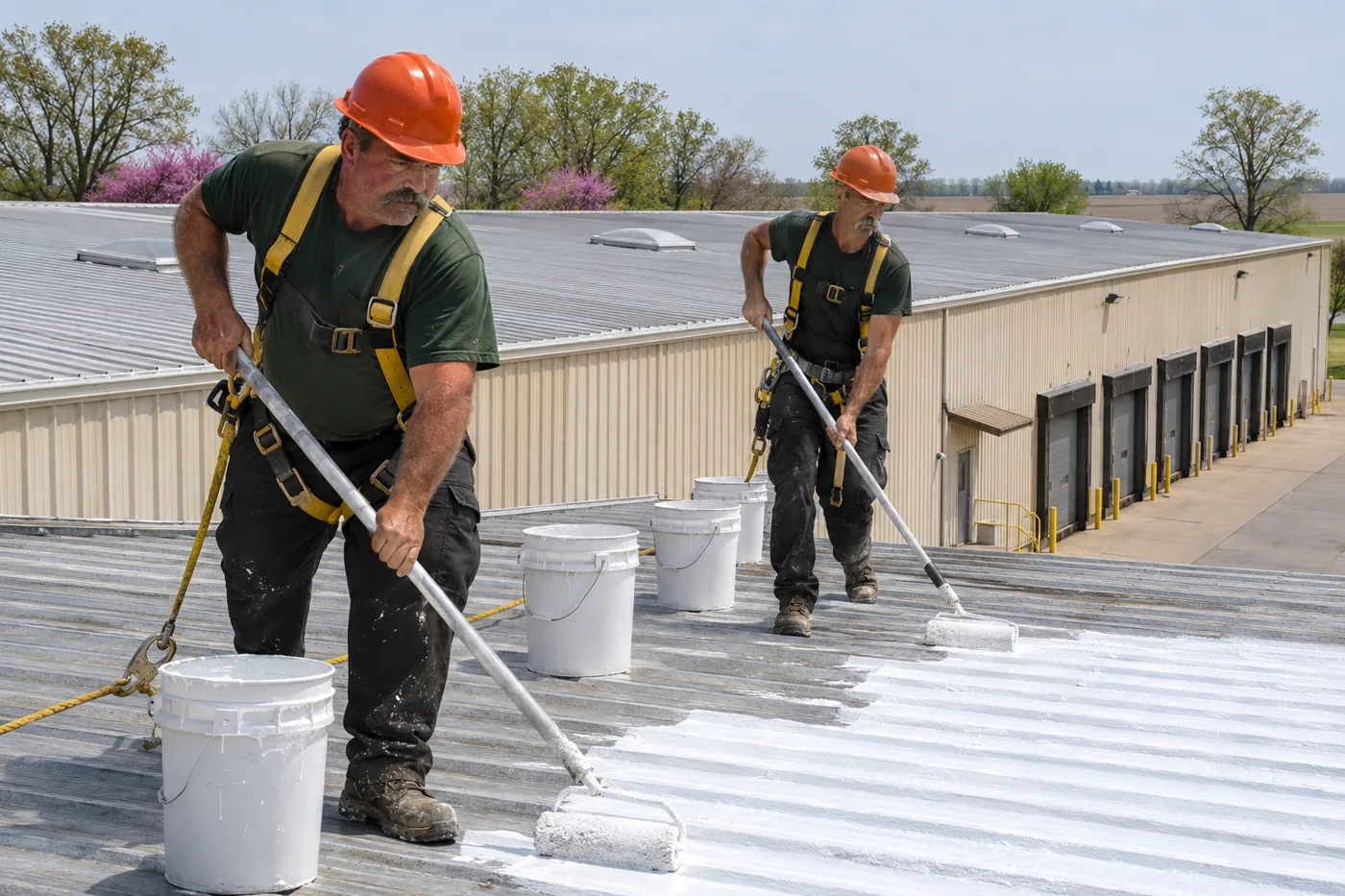
As a Greenwood acrylic roof coating contractor, we roll and spray acrylic over primed, pitched steel roofs that drain fast on warehouses, retail centers, and shops.
Greenwood acrylic roof coating suits roofs that shed water quickly. These rows show what is ready now and what needs work.
| Roof Detail | Ready For Acrylic | Fix First |
|---|---|---|
| Slope | Pitched panels that drain fast | Flat areas get silicone instead |
| Rust | Light surface rust | Heavy scale gets ground and primed |
| Laps | Tight with light staining | Open laps get stitch screws and fabric |
| Old paint | Chalky but bonded | Flaking paint gets scraped back |
| Weather window | Dry, mild days ahead | Rain or frost in the forecast waits |
| Curbs | One sealant layer, still bonded to the metal | Old caulk gets cut back to bare metal |
Acrylic depends on drainage and dry weather, so these five zones get a close look.
Fast-draining roofs dump a lot of water at the eaves. Gutter seams, straps, and the drip edge are fixed so runoff leaves the panels before it can sit.
Pitched steel still leaks at laps when the overlap opens. Laps get stitch screws, tape, and polyester fabric set in the first acrylic coat.
Washers on south-facing slopes harden first from sun. We replace failed screws and cap each head so the acrylic covers a sealed point.
Vent stacks and unit curbs on retail roofs carry layers of old caulk. That caulk is cut out and replaced with one fabric-reinforced detail.
Any area that holds water after rain is marked off. Those spots get silicone or are built up, because acrylic softens under standing water.
Acrylic is one of five coating systems we apply on Greenwood roofs. Each has its place.
The full steel system when rust and screws need work across the whole roof, finished in acrylic or silicone by section.
Flat sections on the same building where water lingers after storms and acrylic would soften.
Pitched steel on stores, warehouses, and shops that drains within minutes of the rain stopping.
Buildings where insulation over the roof is part of the goal, topped with a protective coat.
Shingle roofs on offices and churches that still lie flat, coated with a product made for granules.
Acrylic is a practical finish for steel roofs that drain well.
Reflective acrylic lowers panel temperature on summer afternoons and cuts the heat that reaches stores and shop floors below.
Acrylic takes a fresh acrylic coat years later over a washed surface, which keeps future upkeep simple and affordable to plan.
Polyester fabric set in the first coat reinforces every lap and curb corner where steel moves the most.
Per gallon, acrylic usually costs less than silicone, which adds up quickly on large pitched warehouse and retail roofs.
Call and describe the roof. We will check whether it drains well enough for acrylic and price the coats.
Acrylic needs a sealed surface and a dry weather window. Here is the order of work.
Our walk checks how fast each section drains, how far rust has spread, and whether the old paint still holds. Low spots get marked for a different product.
Laps get stitch screws and tape, failed screws are replaced, and curbs are stripped of old caulk and rebuilt with one detail.
Washing removes chalk so the acrylic grips the paint. Rust gets primer, and fabric goes into laps and curb corners with the base coat.
Two coats in contrasting colors show full coverage. Each coat goes on early enough in the day to set before evening dew.
A building with acrylic on its pitched steel often needs one of these too.
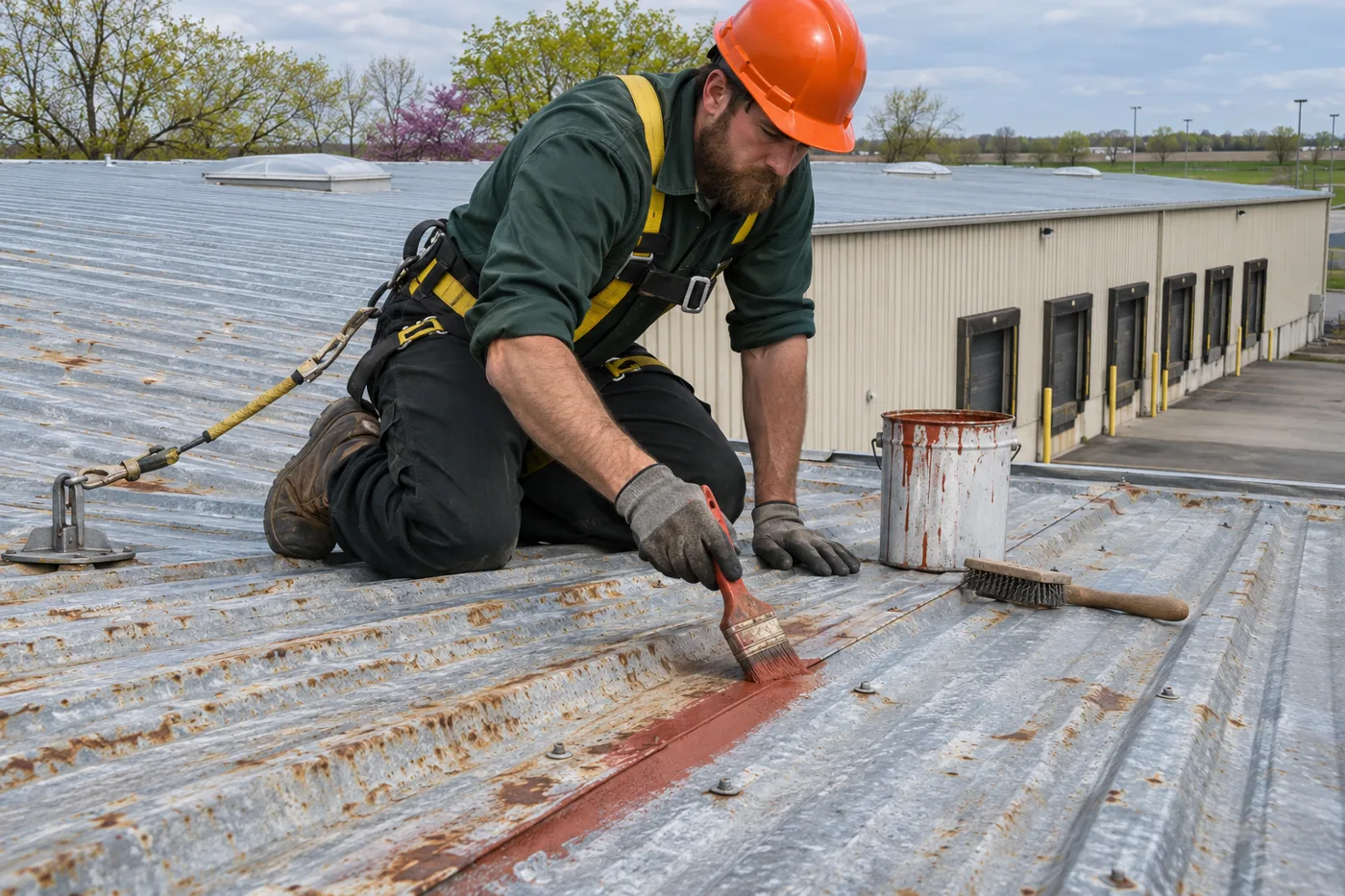
Rusty steel roofs need the full repair and primer system before acrylic.
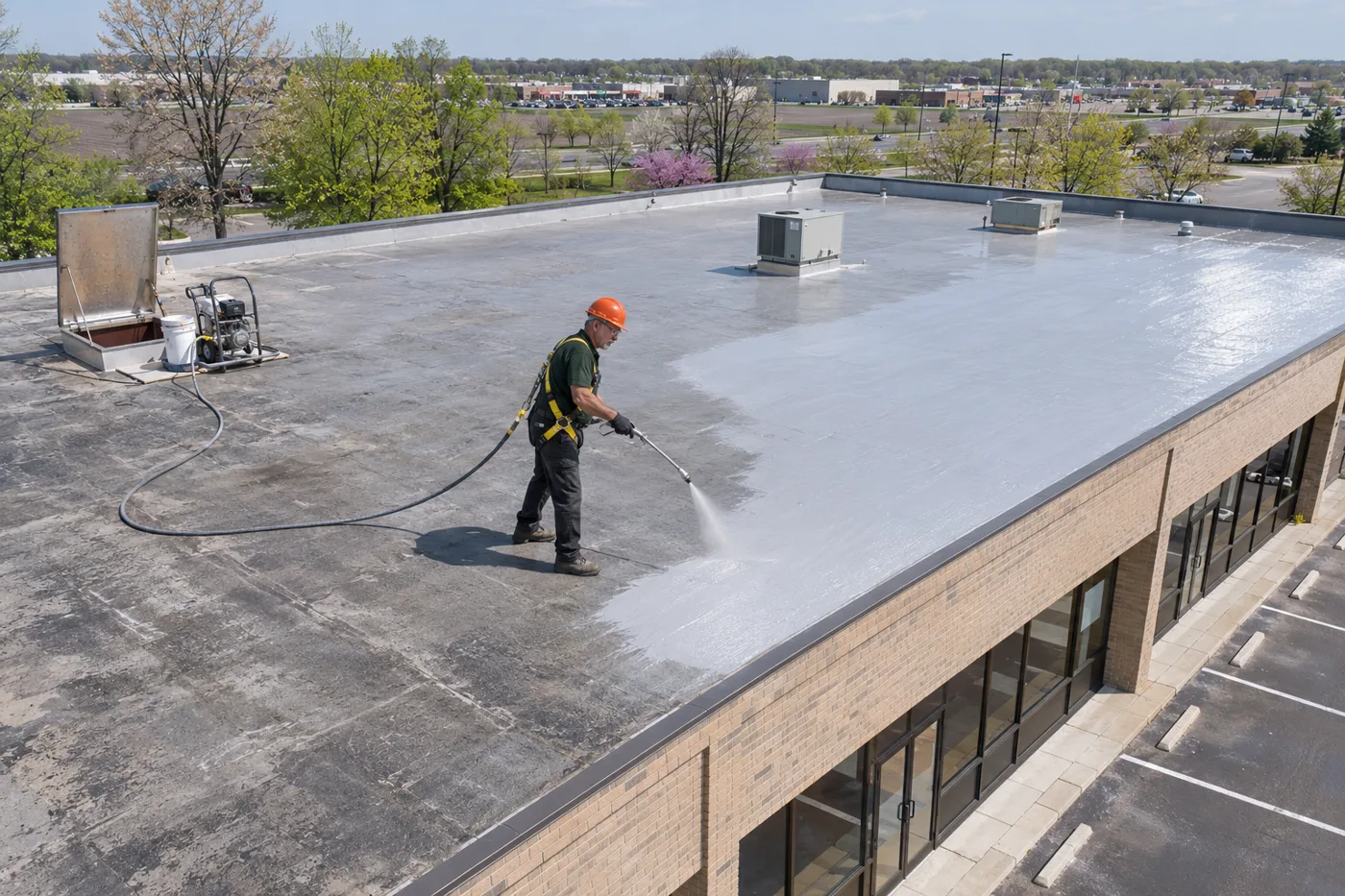
The flat dock roof or addition where water sits after rain takes silicone.
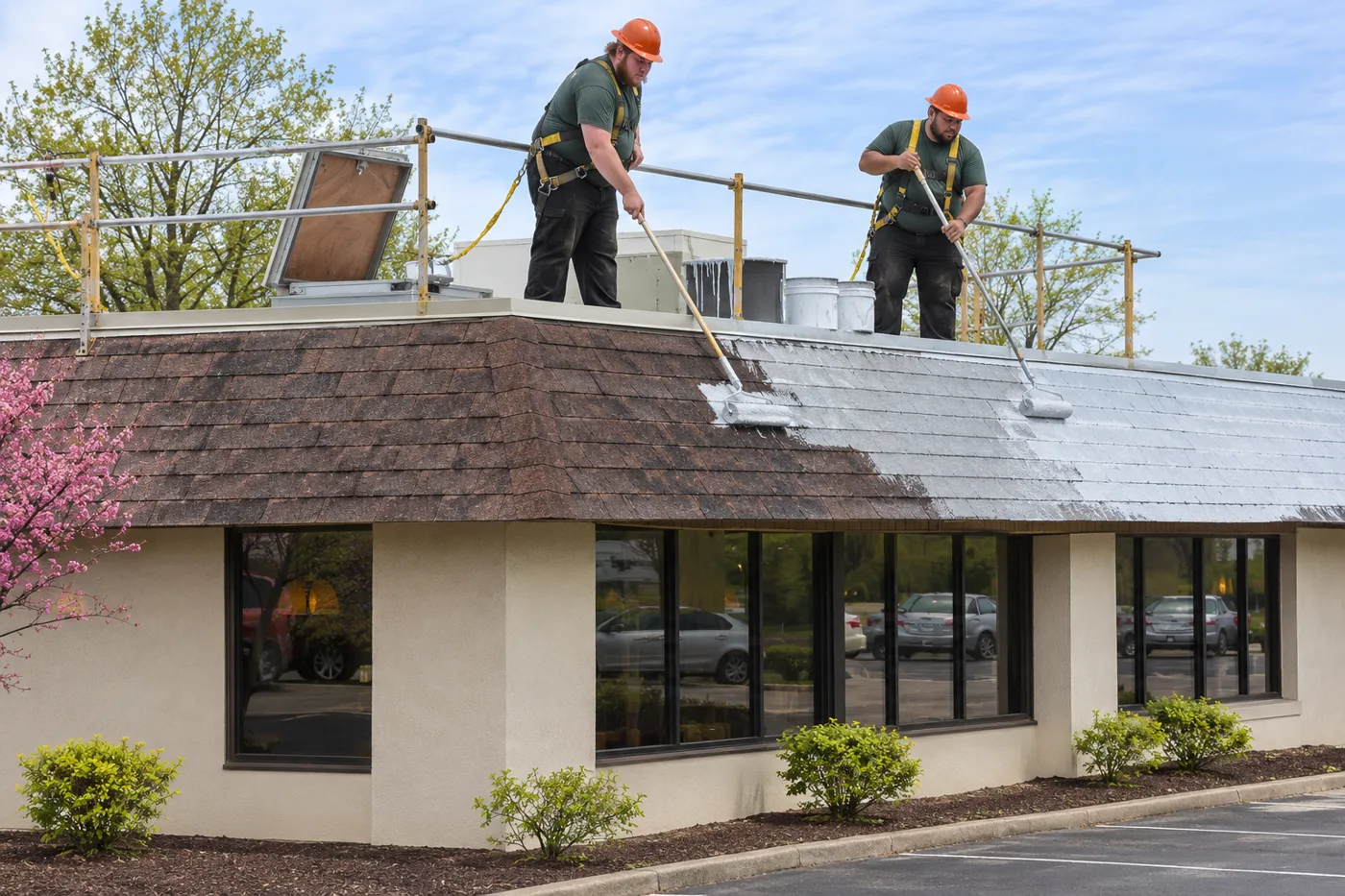
Office wings with asphalt shingles next to the steel building get shingle coating.
Jump to a question below.
On steel that drains quickly, it holds up well. It bonds to primed metal and reflects sunlight. Areas that hold water are a poor match, and active rust needs primer first, since acrylic alone leaves corrosion under it.
Most systems use two coats, often in contrasting colors so gaps are easy to spot, over primer on bare or rusty steel. Seams and screws get a reinforced base layer first. Total dry thickness counts more than the number of passes.
It does on sections that shed water. On sloped steel it seals laps and screws and keeps stores cooler. Where water sits near units or along parapets, we switch those spots to a product that tolerates puddles.
Each coat usually dries to the touch within hours on a warm, dry day, and full cure takes longer. Dew, humidity, and cool nights slow it, and rain before it skins over can wash it off, so we plan coats around the forecast.
Hot steel can make a coat skin over too fast. In July and August, crews start early while panels are cooler and stop before afternoon storms. Once cured, the white finish keeps the panels cooler.
Rain before the film skins over can wash coating off or leave thin spots. We watch the forecast closely, stop early when storms build, and recheck coverage on any area that caught rain before the next coat.
Acrylic grips cured silicone poorly. A roof that already carries silicone gets silicone again, and we confirm what is on the roof with an adhesion test before choosing.
A gray base and white finish make missed spots easy to see from across the roof. Any gray showing through means that area needs another pass before we call it done.
Tell us the roof size and slope, and we will walk it and price the acrylic coats.