Edge And Gutters
Foam changes the roof height at the eaves. Gutters and edge metal are planned so the new surface still drains into them cleanly, and new edge metal goes on where the old trim sits too low.
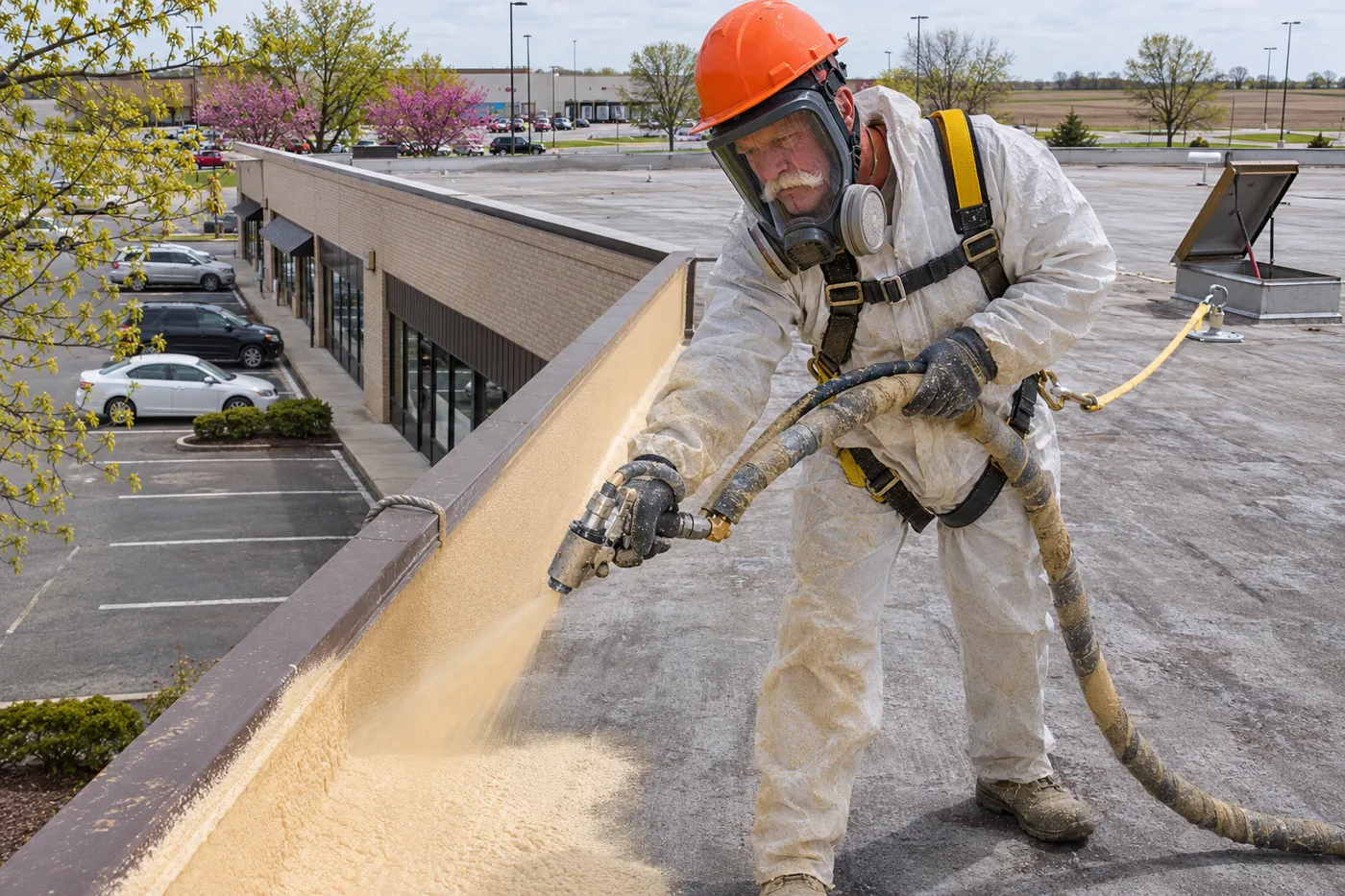
As a Greenwood spray foam roofing contractor, we spray closed-cell foam over firm steel and flat roofs, then topcoat it to protect the foam from sunlight.
Greenwood spray foam roofing needs a firm, dry roof to bond to. These rows show where a roof stands.
| Roof Detail | Ready For Foam | Fix First |
|---|---|---|
| Deck or panels | Firm and well attached | Loose panels get refastened |
| Moisture | Dry insulation and deck | Wet areas get cut out and replaced |
| Rust | Surface rust only | Rust is cleaned and primed before foam |
| Drainage | Water sits in a few low spots | Foam can be built up to slope water off |
| Neighbors | Room to screen parked cars | Calm-day scheduling near truck courts |
| Rooftop units | Curbs tall enough above the new surface | Short curbs get raised before foam |
Foam bonds to what is under it, so these five zones decide how the job is set up.
Foam changes the roof height at the eaves. Gutters and edge metal are planned so the new surface still drains into them cleanly, and new edge metal goes on where the old trim sits too low.
Ribs and laps on steel panels fill in with foam, which ends lap leaks in one step. Panels underneath get cleaned and primed first so the foam bonds across every rib.
Every screw head ends up under foam, so loose screws are refastened before spraying. That keeps panels from moving under the foam later and cracking the surface.
Unit curbs and pipes get foam built up around them with a smooth slope. Air intakes are masked so overspray stays out of the building and off the units.
Extra foam sprayed in low areas moves water toward drains. That is one reason owners choose foam over a coating on flat roofs that pond after every storm.
Foam is one of five roof systems we install around Greenwood, and each suits a different roof.
A coating system for steel that needs sealing at screws and laps but no added insulation.
The topcoat often used over foam, and a stand-alone choice for flat steel that holds rain.
Another foam topcoat option on roofs that drain well and see little standing water.
Closed-cell foam where the roof needs insulation, better drainage, and leaks at many laps.
A separate breathable product for shingle roofs on offices attached to the main building.
Foam does more than seal: it changes how the building handles heat and water.
Foam over the roof slows heat loss in winter and heat gain in summer.
Ribs, laps, and screws disappear under one layer of foam.
Thicker foam in low areas moves standing water toward drains.
A worn topcoat gets cleaned and recoated instead of replaced.
Call and describe the building. We will check whether foam fits the roof and price it.
Foam roofing depends on dry surfaces and calm air. These four stages set it up.
Our walk checks that panels or deck are firm, cores test for wet insulation, and we note where parked cars, intakes, and truck lanes sit near the roof edge.
Loose panels are screwed down, wet insulation is removed and replaced, and rusted spots are cleaned back to firm steel.
Panels are washed and primed for foam. Intakes and nearby surfaces are masked, and wind screens go up when needed.
Foam goes on in lifts to the planned thickness and slope. A silicone or acrylic topcoat follows promptly so the foam is never left bare to sunlight.
Foam roofs rely on a coating over them, and some buildings need more than one system.
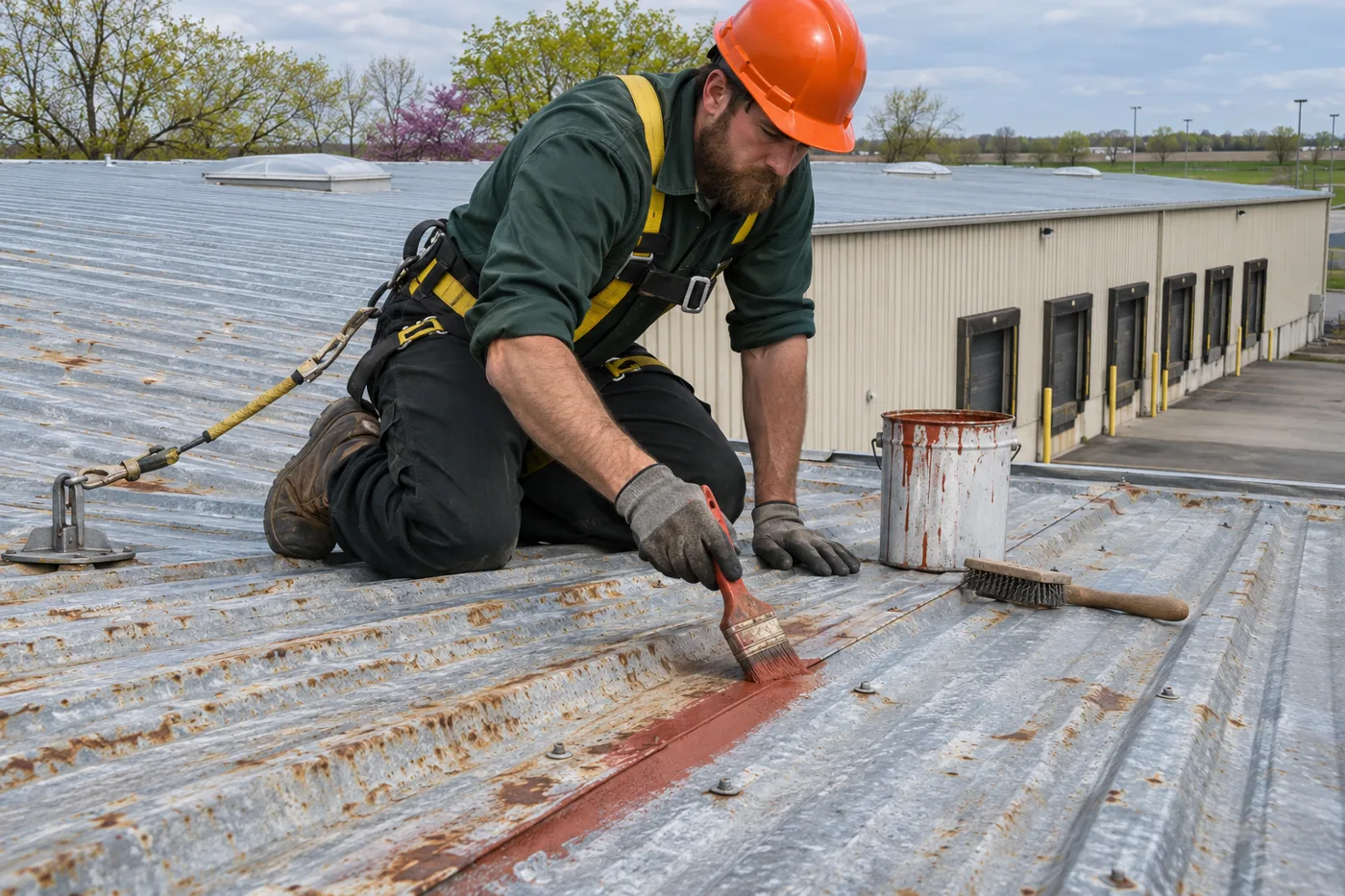
Steel sections that need sealing and no added insulation get the coating system.
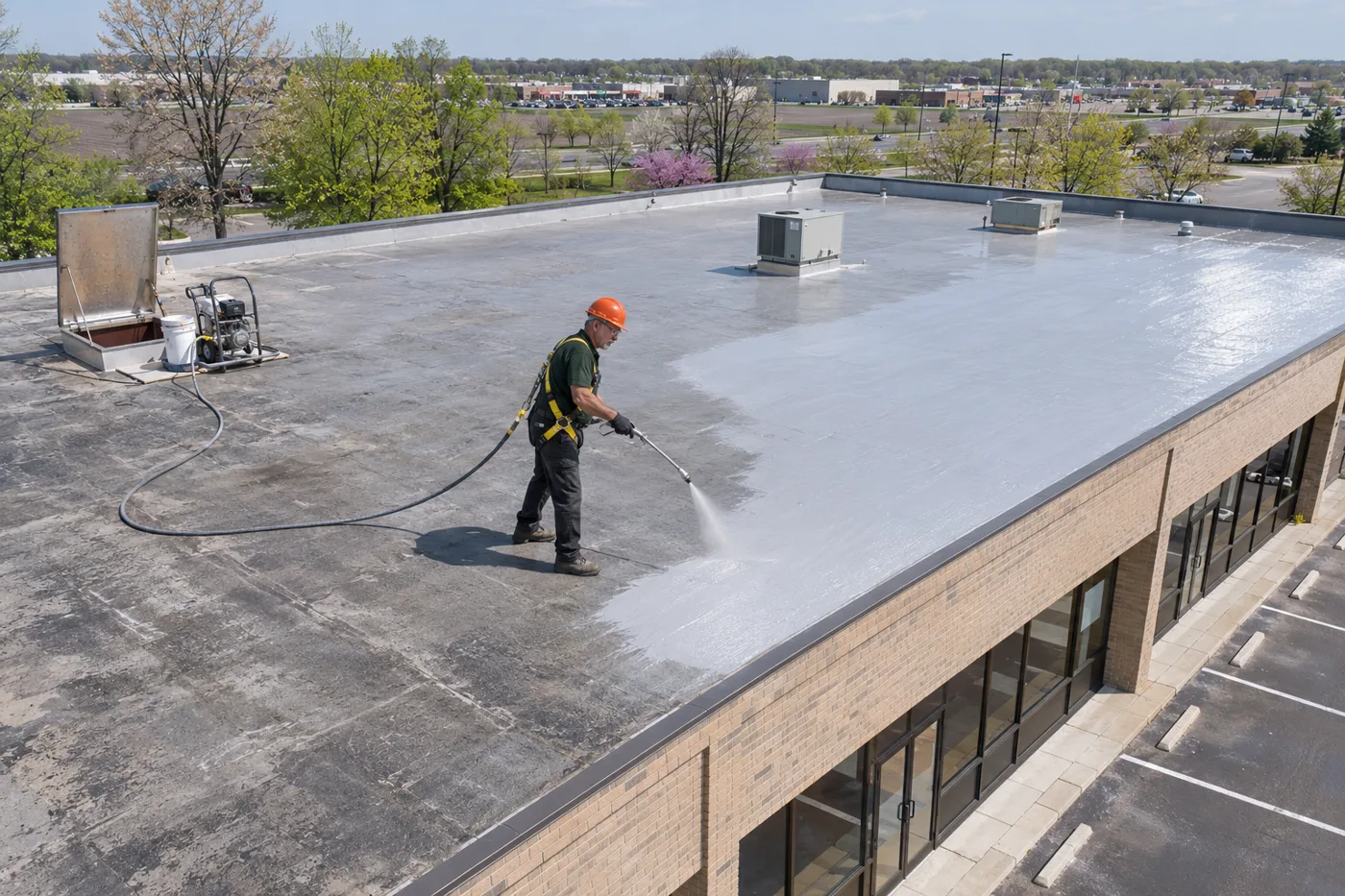
Silicone topcoats protect foam on flatter roofs that hold some water.
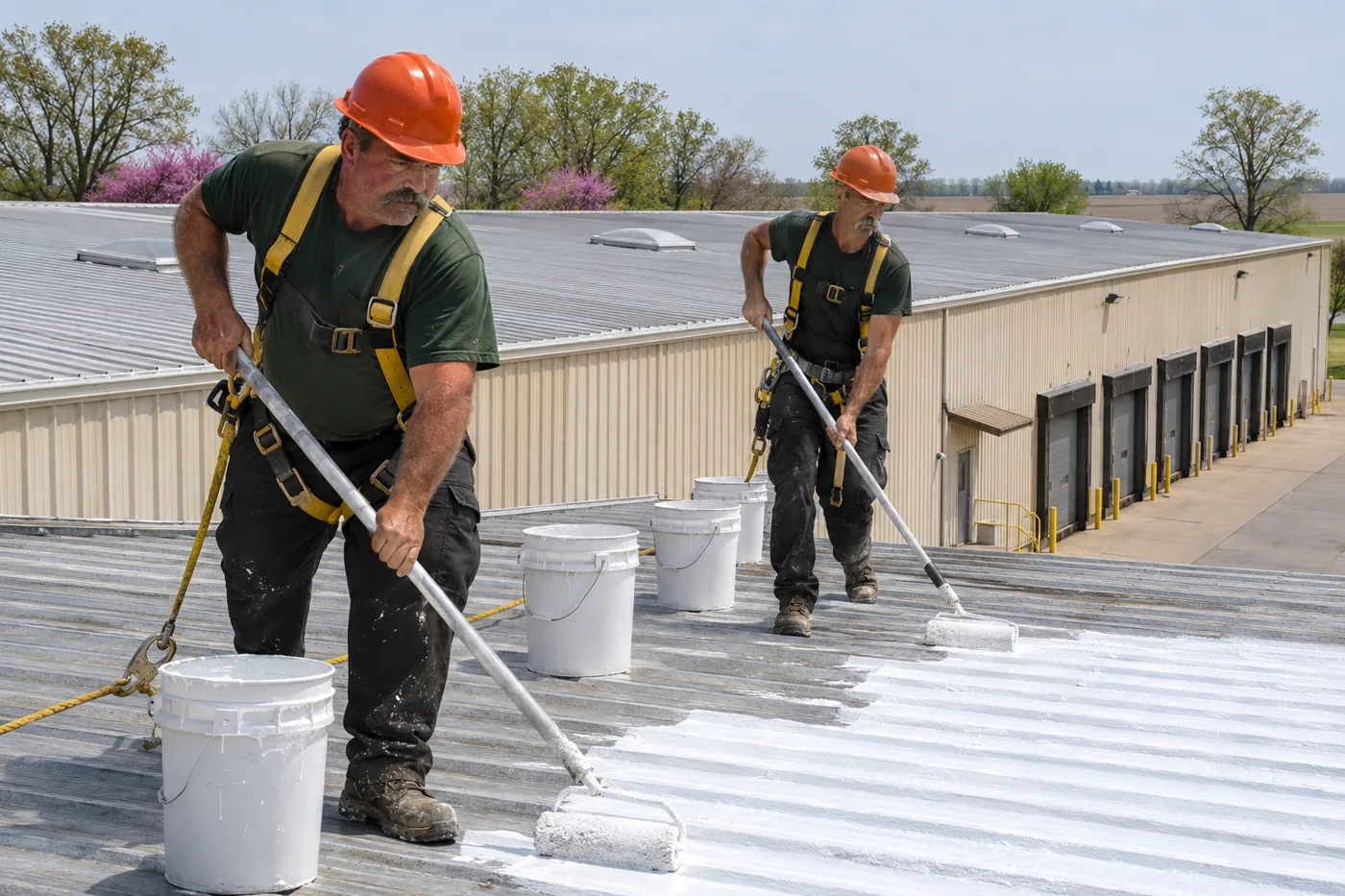
Acrylic works as a topcoat over foam on roofs that drain quickly.
Jump to a question below.
Recoating is due when the topcoat wears thin enough to expose foam, which sunlight breaks down. Chalking, bare spots, and hail pits are the signs. A look every few years and after hail storms catches wear before foam is damaged.
On the plus side, foam is continuous, insulates, can be built up to fix drainage, and goes over many existing roofs. On the minus side, it needs dry, calm weather to install, its topcoat needs renewing, and hail or foot traffic can mark it.
Weather limits during installation, overspray risk to nearby trucks and cars, and topcoat upkeep are the main ones. Wind screens, calm-day scheduling, walk pads near units, and follow-up inspections keep those in check.
Yes. Foam bonds to clean, primed steel and fills the ribs, giving one continuous surface over the old roof. Panels must be firm and attached, rust is treated first, and a topcoat goes over the foam before it sees sun.
Thickness is set by the insulation the owner wants and the slope needed for drainage, so it changes across the roof. We measure it as we spray, build it up in low areas, and record it for the owner along with the topcoat thickness.
Foam is light compared with a new layer of panels or a ballasted membrane. We still check the structure and the roof history before recommending it, and the scope notes the planned thickness.
With planning, it can. Intakes are masked and units shut down near the spray area, and work moves across the roof so offices and floors below keep running.
Silicone suits flatter foam roofs that hold some water, and acrylic suits roofs that drain well. The topcoat goes on soon after the foam, at the thickness the system calls for.
Tell us about the building and roof, and we will walk it and price the foam and topcoat.