Edge And Gutters
Water backing up behind clogged gutters soaks the eave panels on flat roofs. Gutters are cleared and resealed so the edge drains before silicone is sprayed.
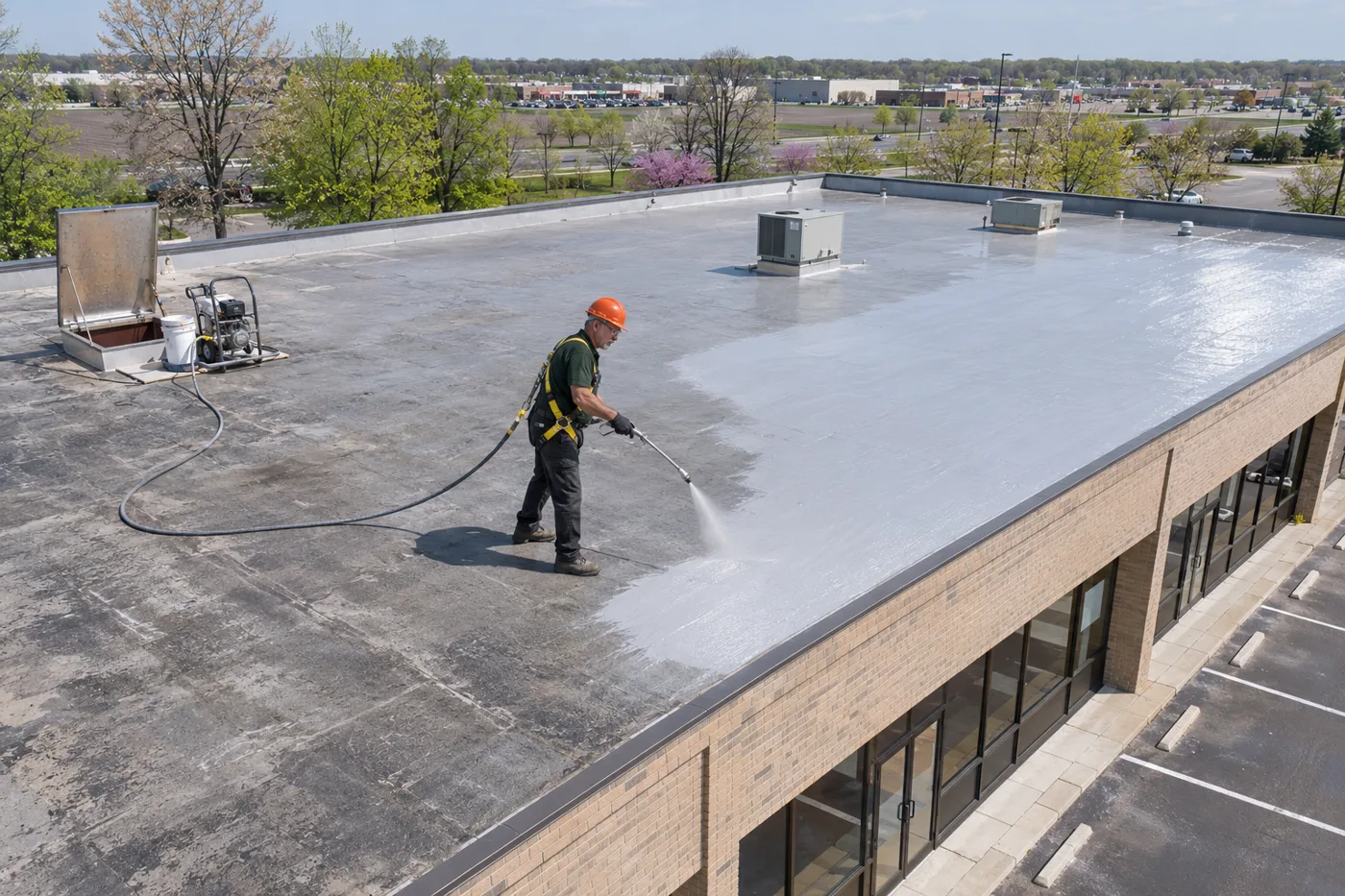
As a Greenwood silicone roof coating contractor, we spray silicone over primed steel and flat sections that hold water after storms on warehouses, plants, and stores.
Greenwood silicone roof coating goes on clean, dry surfaces that are firm underneath. Use these rows as a first check.
| Roof Detail | Ready For Silicone | Fix First |
|---|---|---|
| Slope | Low slope or flat sections | Steep panels may suit acrylic better |
| Standing water | Puddles clear within a day or two | Clogged drains get cleared first |
| Old coating | Clean silicone or bare primed steel | Peeling acrylic gets scraped off |
| Surface dirt | Washed and dry | Oily exhaust film gets degreased |
| Insulation | Dry under the deck | Wet sections get replaced before spraying |
| Seams | Laps closed and taped | Open laps get stitch screws and fabric |
Five zones tell us whether silicone belongs on a roof and what has to happen before it goes on.
Water backing up behind clogged gutters soaks the eave panels on flat roofs. Gutters are cleared and resealed so the edge drains before silicone is sprayed.
Shallow laps on low-slope steel sit in water longer than laps on pitched roofs. Each one gets fabric and a heavier silicone pass along the joint.
Puddles around screw heads soften old washers faster. New screws and sealant caps go in before the first silicone pass covers them.
Grease and exhaust film around kitchen and process fans keep silicone from bonding. Those curbs are degreased and primed first.
Dirt rings show where water sits. We clear drains, flag sagging purlins for the owner, and coat only once the surface is dry.
Silicone is one of five systems we apply around Greenwood. Each fits a different roof.
The full steel restoration system when rust and screws are the main trouble.
Flat and low-slope areas that hold water, where sun and puddles wear other coatings faster.
Pitched panels that drain within minutes of a storm ending.
Roofs that need both insulation and a way to build up low spots.
Asphalt shingle sections, coated with a breathable product made for granules.
Silicone earns its cost on roofs where water lingers and summer sun hits hard.
Silicone keeps its film where rain sits on flat steel after a storm, the spot where water-based coatings soften and wear first.
The cured film keeps its thickness instead of chalking away each summer, so the planned mils stay on the roof for years.
Laps, screw heads, and curb corners sit under the same unbroken layer, with extra film built up along every seam.
A clean silicone roof takes a fresh silicone coat years later without tear-off, after a wash and a quick adhesion check.
Call and tell us where the water sits. We will check the drains and price silicone for that section.
Silicone needs a clean, dry, sealed surface. These four stages get the roof there.
Walking the roof after rain shows where water collects. We probe the deck under each puddle area and run a small adhesion patch on any old coating.
Drains and scuppers get cleared and resealed. Loose screws are replaced and capped, and any wet insulation under a low spot is swapped out.
Washing removes dirt and chalk across the field. Fan curbs are degreased, rust is primed, and laps get fabric set in silicone.
Silicone goes on in one or two passes to the planned dry thickness, heavier at laps and low spots, with gauge readings logged as we go.
Silicone often shares a building with one of these.
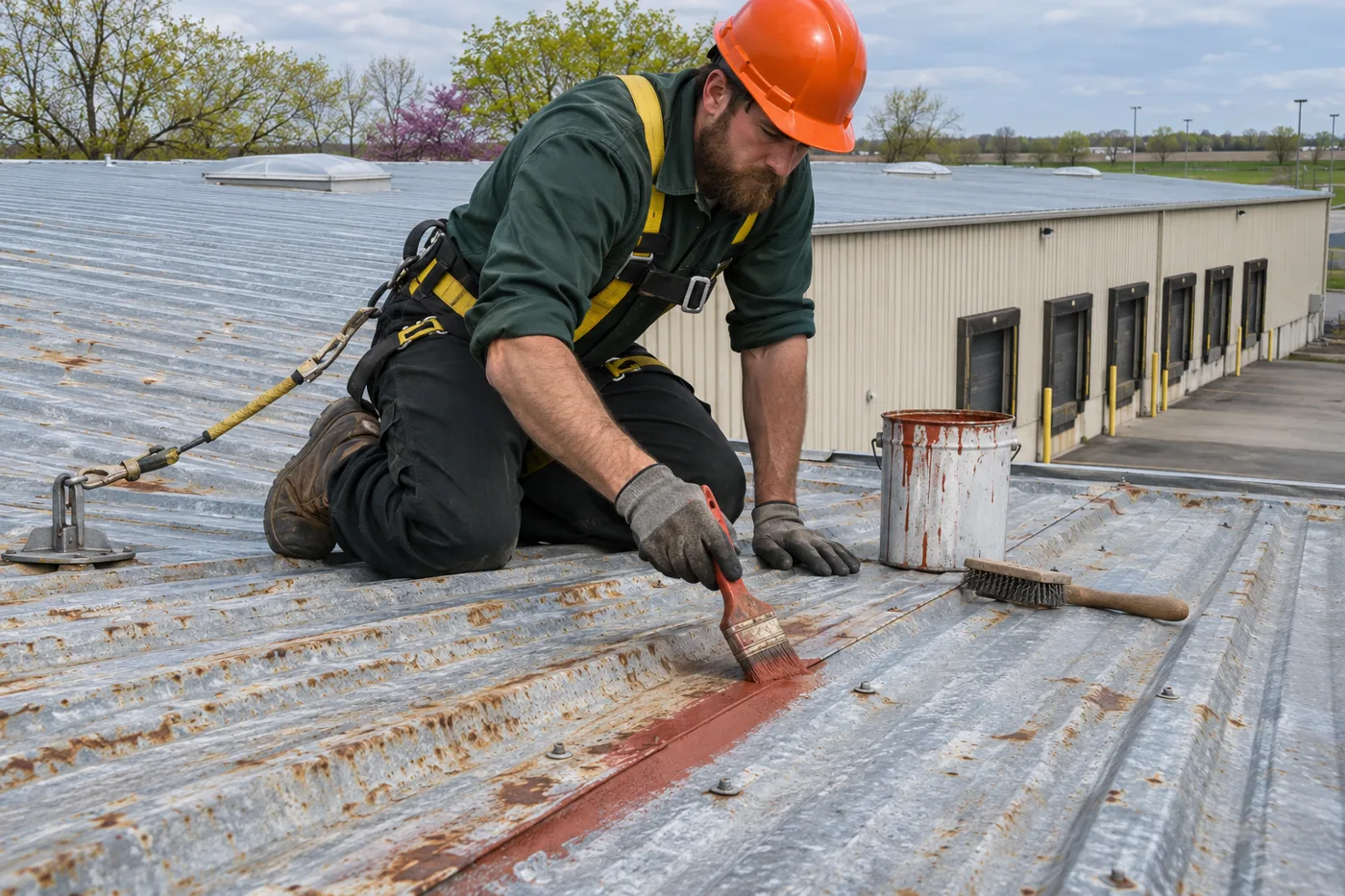
Steel fields around the flat section, where screws and rust need the full system.
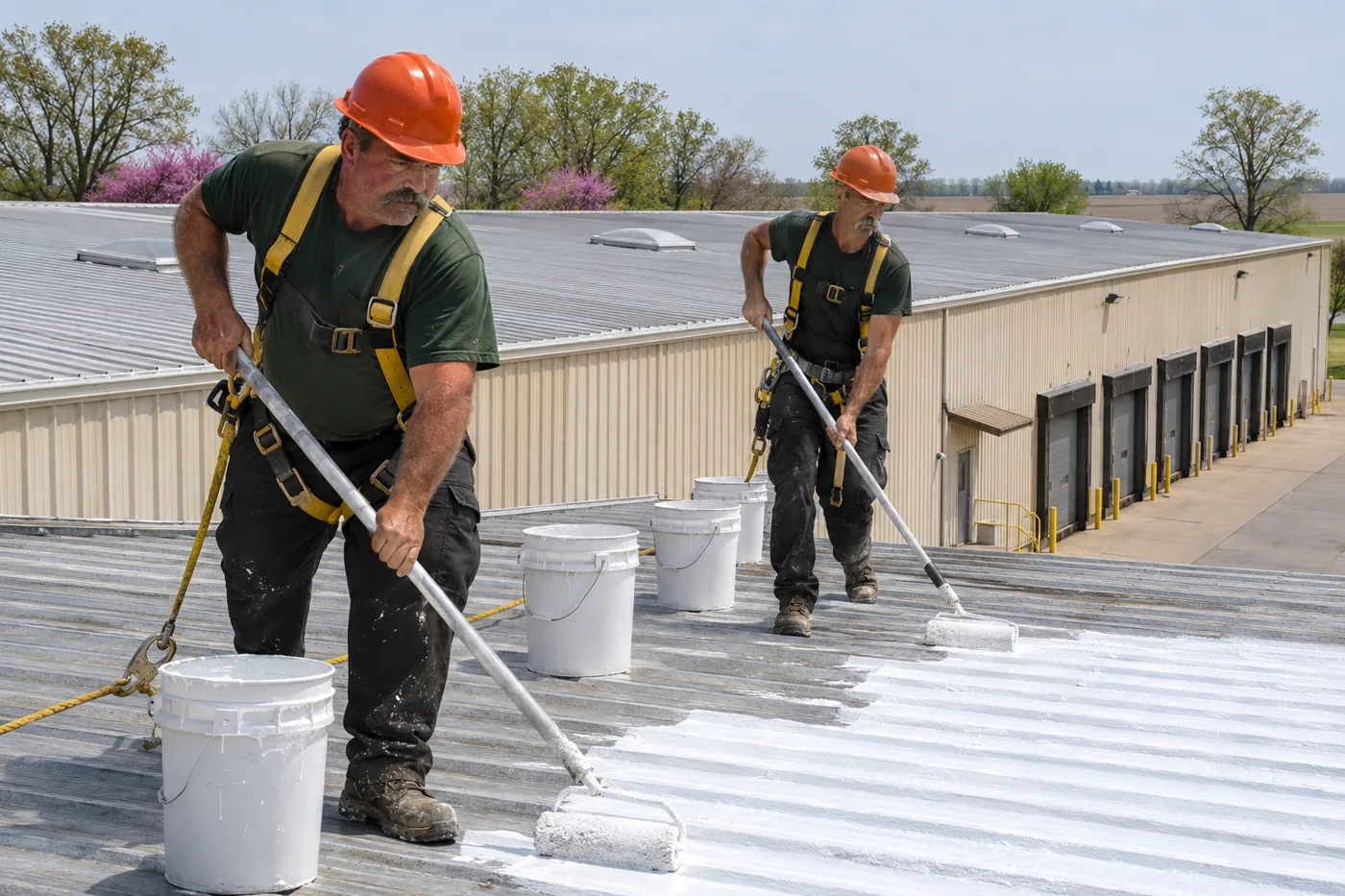
Pitched panels on the same building drain fast and cost less to coat with acrylic.
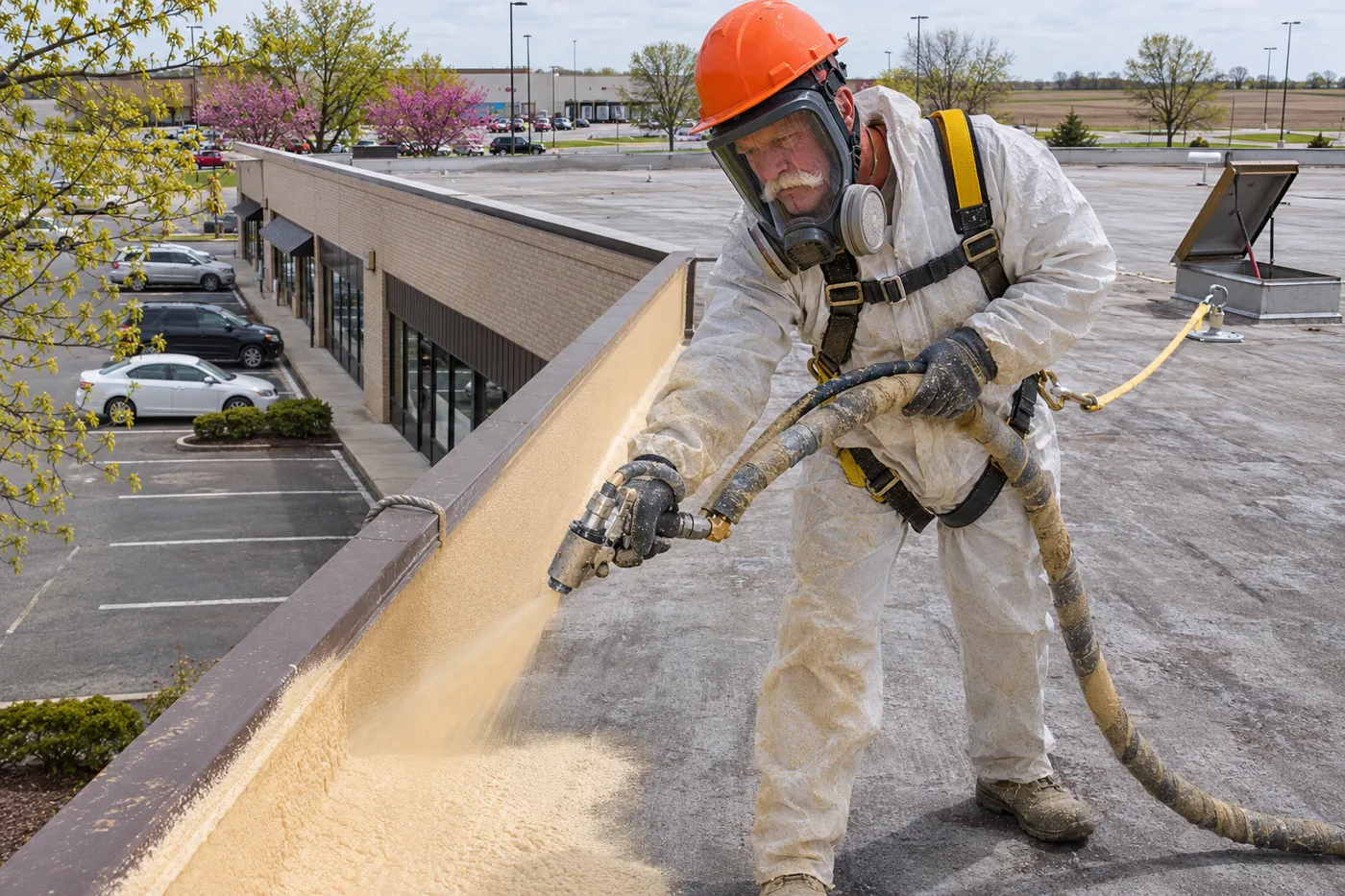
Low spots get built up with foam before a silicone topcoat goes over them.
Jump to a question below.
Ten to twenty years is a fair planning range here. Applied thickness and product choice set where a roof lands. Silicone keeps its film under sun, so dirt and foot traffic near units are bigger risks, and walk pads plus washing help.
Low-slope plant roofs that hold water after rain usually get silicone. Pitched steel that drains fast suits acrylic at a lower material cost. Silicone collects more dirt and only takes silicone later, and exhaust from process fans is part of the decision.
It works when sprayed over a clean, firm, primed surface at the planned thickness. Failures we see trace back to dirt, oil, loose rust, or a thin pass, so most of the job is preparation before any silicone comes out.
Silicone tolerates puddles better than acrylic, so it is the usual choice there. It goes only on dry surfaces, and the cause of the water gets addressed first: clogged drains are cleared and sagging purlins are flagged for the owner.
Acrylic bonds poorly to cured silicone, so a silicone roof is recoated with silicone. We clean the old film, check adhesion on a test patch, and add a fresh silicone coat where wear shows.
Wet silicone is slick, so walk pads go in along routes to rooftop units and drains. Service techs then stay on the pads, which also keeps boots from scuffing the film near equipment.
More dust sticks to silicone than to acrylic, which dulls the white finish over time. A gentle wash every few years brings back much of the reflectivity without harming the coating.
Cooler days are easier on silicone than acrylic, since it cures from moisture in the air. The roof still has to be dry, and frost or dew has to burn off before spraying starts.
Send the roof area and where water sits after storms, and we will walk it and price the silicone.