Edge And Gutters
Heavy runoff from wide plant roofs overloads gutters and rusts the eave panels from the cut edge. Gutters are resealed and eave ends primed.
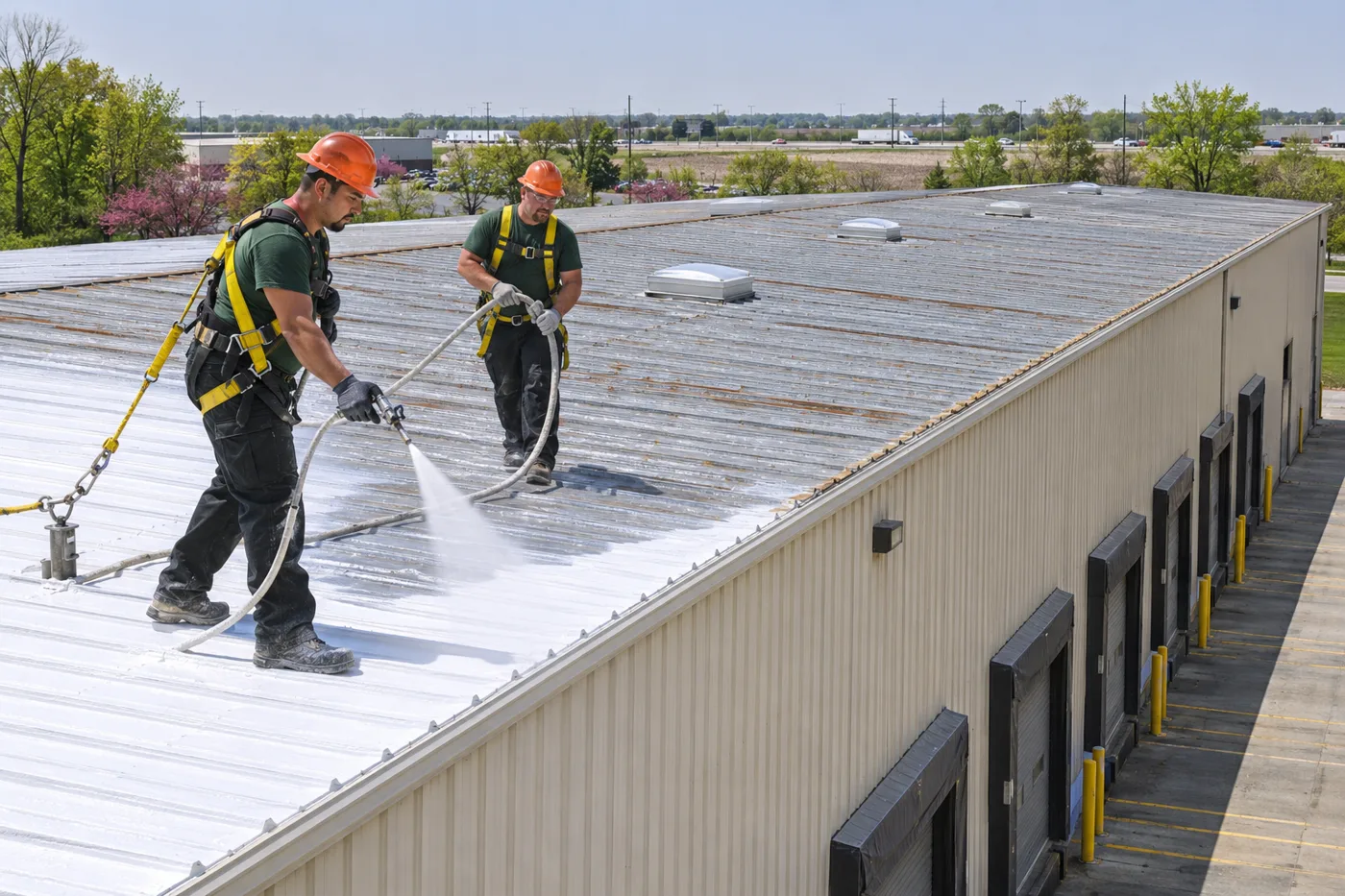
As a Franklin metal roof coating contractor, we coat steel roofs on plants, shops, and storage buildings, section by section, so production below stays dry.
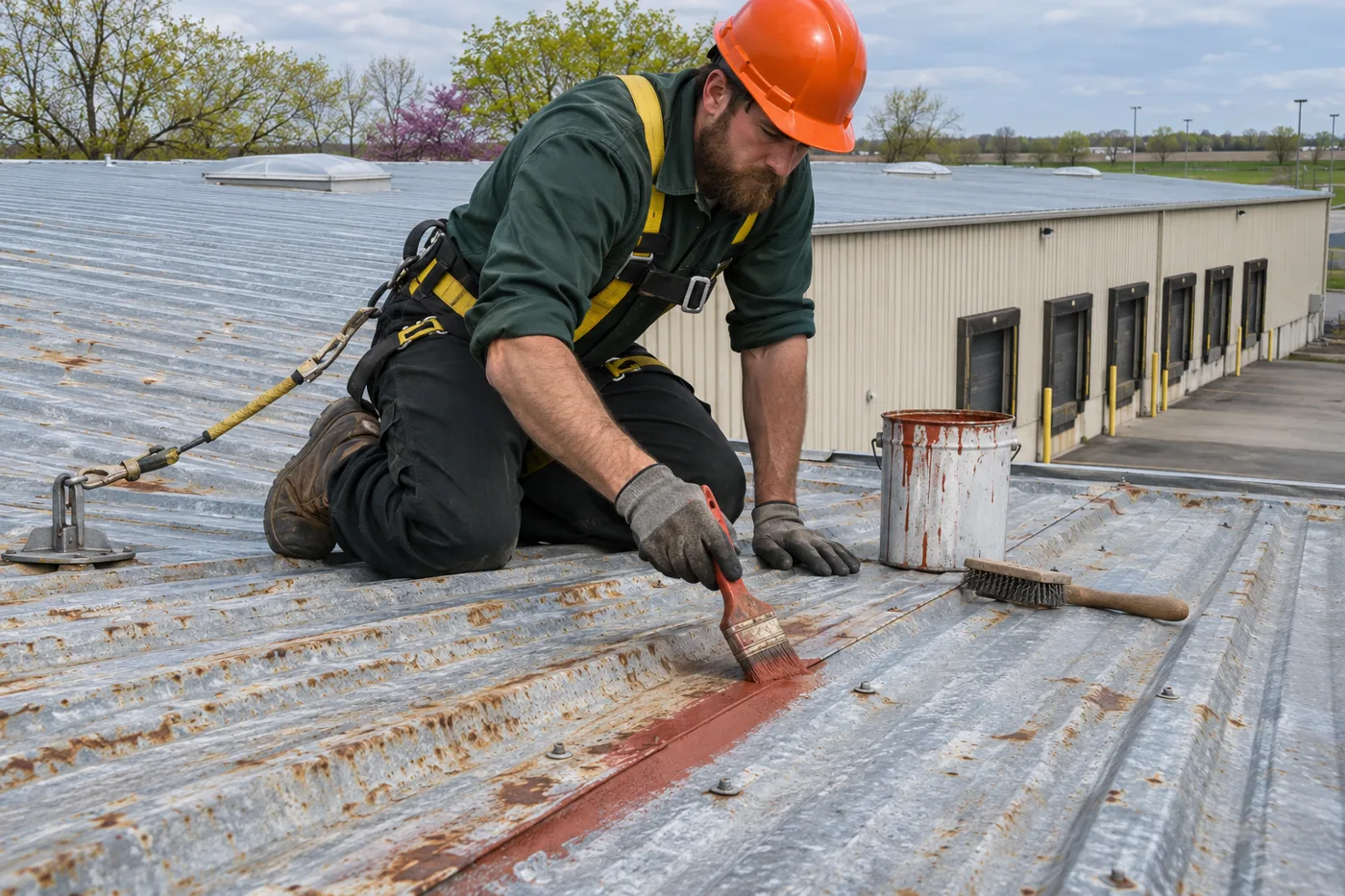
Franklin metal roof coating jobs often sit over working production floors. We split the roof into sections and finish each one, sealed and dry, before moving to the next, so no bay sits open overnight.
Shift supervisors get a schedule showing which bays sit under active work each day, so forklifts, staging, and loading stay planned around the crew, and noisy work over offices can move to quieter hours.
Plant roofs in Franklin show the same five zones as any steel roof, with a few details of their own that change how each section is planned.
Heavy runoff from wide plant roofs overloads gutters and rusts the eave panels from the cut edge. Gutters are resealed and eave ends primed.
Vibration from presses and fans below can loosen stitch screws at laps over time. Laps get new stitch screws, tape, and fabric.
Long purlin lines carry hundreds of screws per section. Each row is checked, loose screws are driven or upsized, and heads are capped.
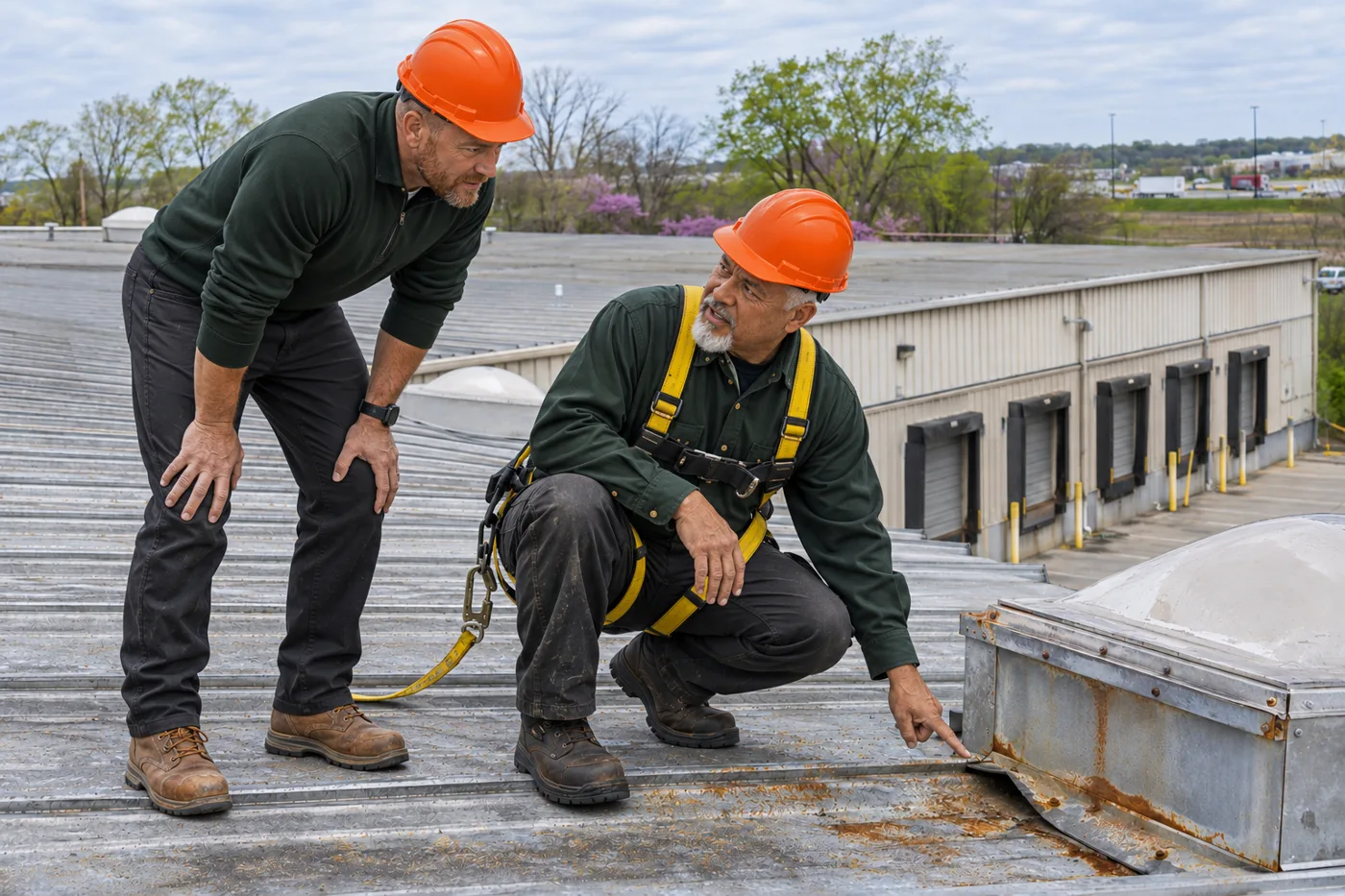
Process exhaust and makeup-air units leave film and residue. Curbs are degreased and wrapped with a fabric-reinforced detail.
Additions built onto older bays create low valleys where water sits. Those runs get silicone or added drainage.
For a working plant, the benefit is a dry roof without shutting down a line.
Each section is coated while production continues under the rest of the roof, with the busiest bays scheduled for quieter shifts.
Stitched and taped laps stop the drips that follow summer storms and spring melt over press lines and storage racks.
A white finish reflects heat off panels above the work areas, which helps shops with little or no insulation under the steel.
A sketch shows which sections were coated, when, and with what, so maintenance staff know the roof history.
Here is how each system fits buildings around Franklin.
Main plant and shop roofs with rust at the eaves, loose laps, and screw lines to seal before coating.
Flat additions and the low valleys between older bays where rain sits after storms.
Pitched storage buildings and shop roofs that drain fast and need a lighter-cost finish.
Shops that run hot in summer and need insulation added over the steel.
Front offices and break buildings with asphalt shingle roofs that still lie flat.
Call and tell us which bay is wet. We will find the source and price the repair for that section first.
Every Franklin plant roof follows four stages, run one section at a time.
Walking each bay, we mark sections on a sketch, pull-test screws, and probe rust at eaves and laps. Production schedules and exhaust locations shape the section order.
Screws, laps, and curbs in the first section are repaired and sealed before the crew opens the next one, and holed panels are swapped before the crew leaves that section.
Pressure washing runs away from intakes and dock doors. Rust gets primer, process-film areas get degreased, and seams get fabric and mastic.
Base and finish coats go on, readings are logged, and the section is closed up before the shift change so the floor below stays dry.
We also coat commercial steel roofs in Greenwood and these nearby towns.
Outside these towns? Call us or send us a message.
Warehouse roofs with long purlin lines of screws.
Farm-business buildings with rust at the eaves.
Flex building roofs shared by several tenants.
Distribution roofs with long panel runs.
Jump to a question below.
We do, from manufacturing shops to storage buildings. The steps match our Greenwood work: roof walk, washing, rust treatment, screw and seam sealing, then the finish coat. Plants that run shifts can have the roof done in sections so work areas stay dry.
Roof size, the number of failed screws, rust at laps and eaves, curbs and fans, and the coating chosen set the price. Planning ranges run $2.50 to $4.00 per square foot for coating and $5 to $8 for replacement, firmed up after a roof walk.
Yes. Coating happens on top of the roof, so offices, shops, and plant floors keep working. We plan staging and wash water around doors and air intakes, and noisy steps such as screw replacement over offices can be moved to early mornings or weekends when that helps.
Call us. Small shops and storage buildings get the same roof walk and written scope as large plants, and the price reflects the smaller roof. Smaller jobs can often be fit between larger ones, and the repair list still shows every screw, lap, and curb that needs work.
Sections follow bays, expansion joints, or roof heights, sized so each one can be repaired, prepped, and coated in a day. The sketch shows the order, and sections over the busiest lines or clean rooms can be moved to shutdown weeks or weekends.
If the plant has a planned shutdown, the sections over the busiest lines can be scheduled then. The rest of the roof is coated in sections while normal shifts run.
It does. Oily or chemical film keeps coatings from bonding, so curbs and nearby panels are degreased and an adhesion patch confirms the surface is clean before coating.
The worst areas can be repaired and coated first while sections in good shape wait. The sketch shows what was done, so the rest can be scheduled later.
Tell us the building use and roof size, and we will plan the sections and price the work.